
Shop the Collection
Have Questions?
We'll review your message and get back to you within 48 hours.
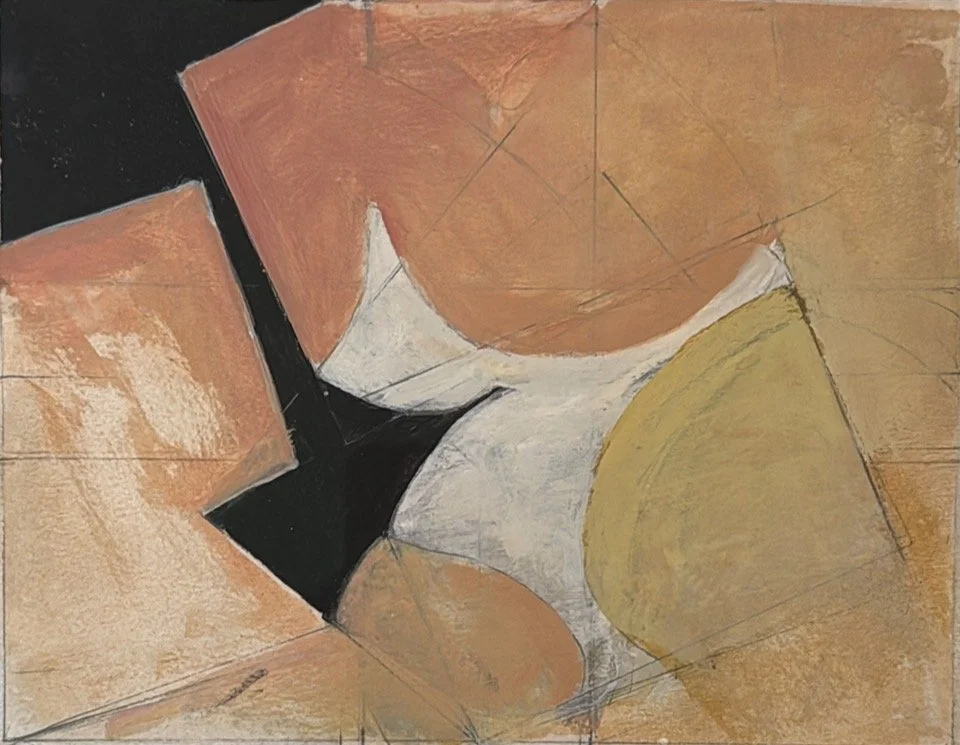
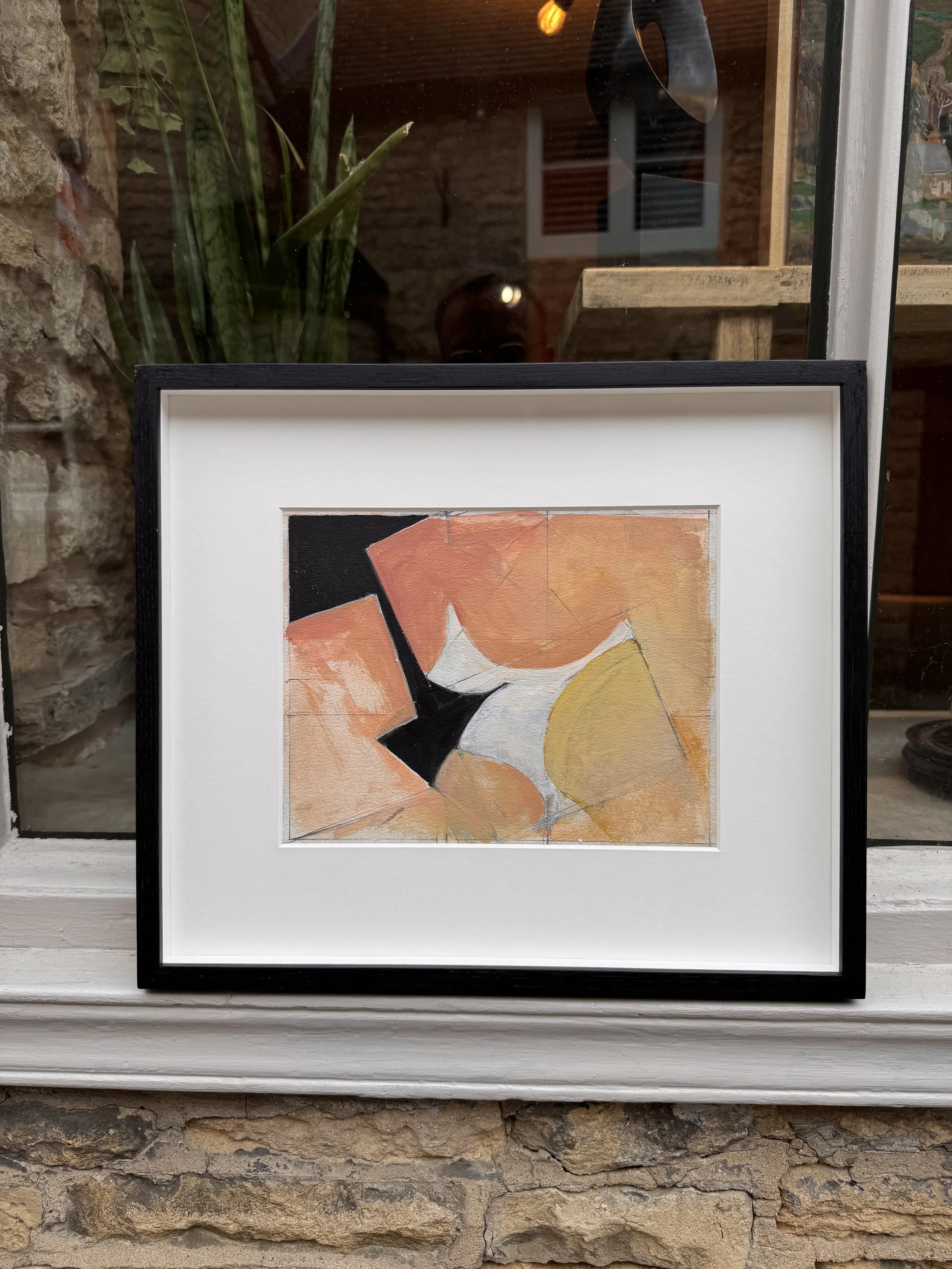
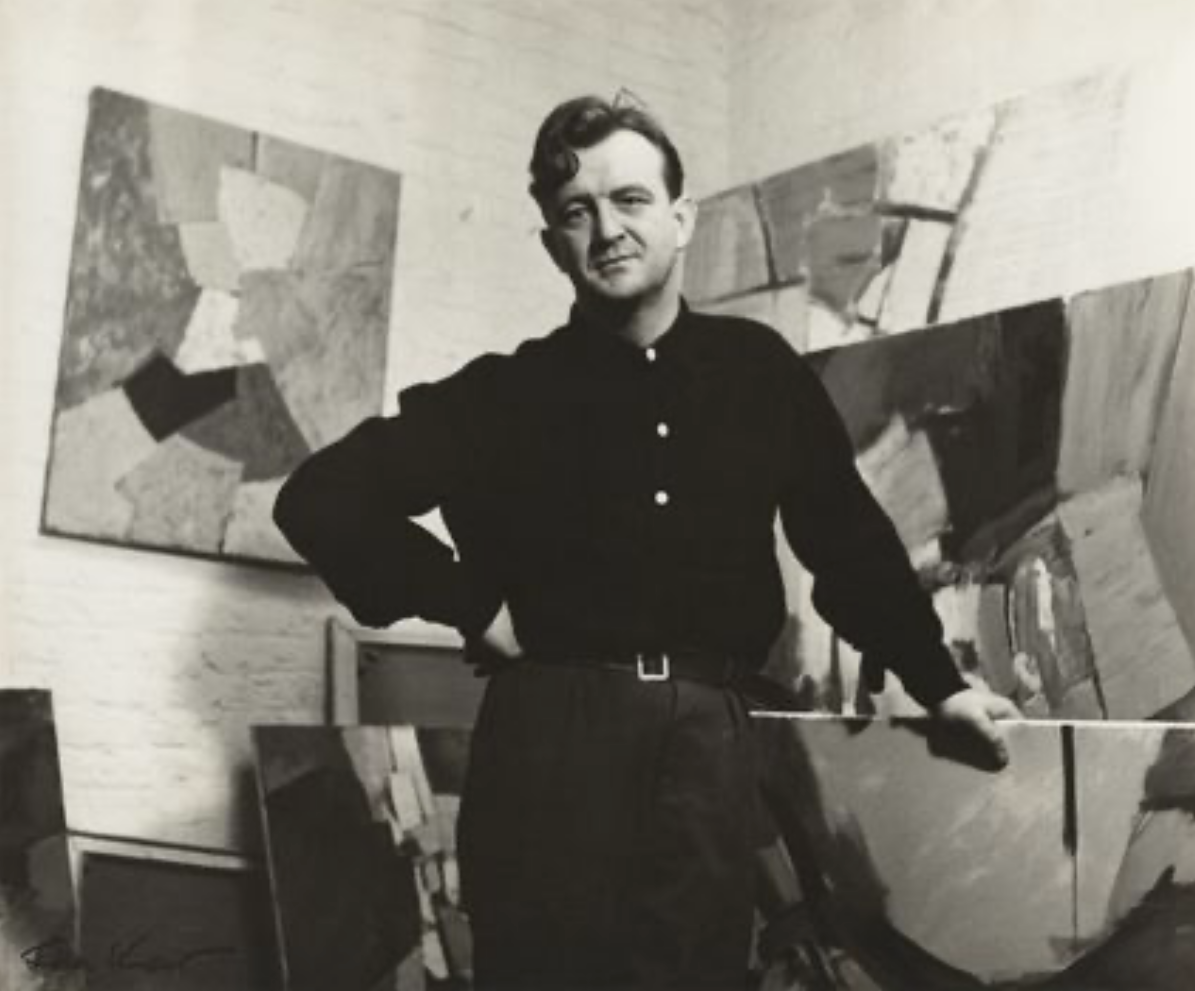
Adrian Heath (1920-1992)
Untitled
Pencil and Gouache
Adrian heath was a key figure in post-war British abstraction. Trained at the Slade School of Fine Art, he developed a disciplined yet expressive visual language shaped by constructivist ideas, geometric structure, and a sustained interest in the possibilities of non-figurative painting. His work reflects the wider transformation of British art in the mid-20th century, as artists moved towards abstraction while maintaining a strong sense of compositional order.
Heath’s work is represented in several major public collections, including Tate, the Hirshhorn Museum in Washington D.C., the British Museum, the British Council Collection, and the Arts Council Collection. It is also held by museum collections in Bristol, Leicester, and Glasgow, reflecting his widespread significance within the history of British modern art.
£1,750
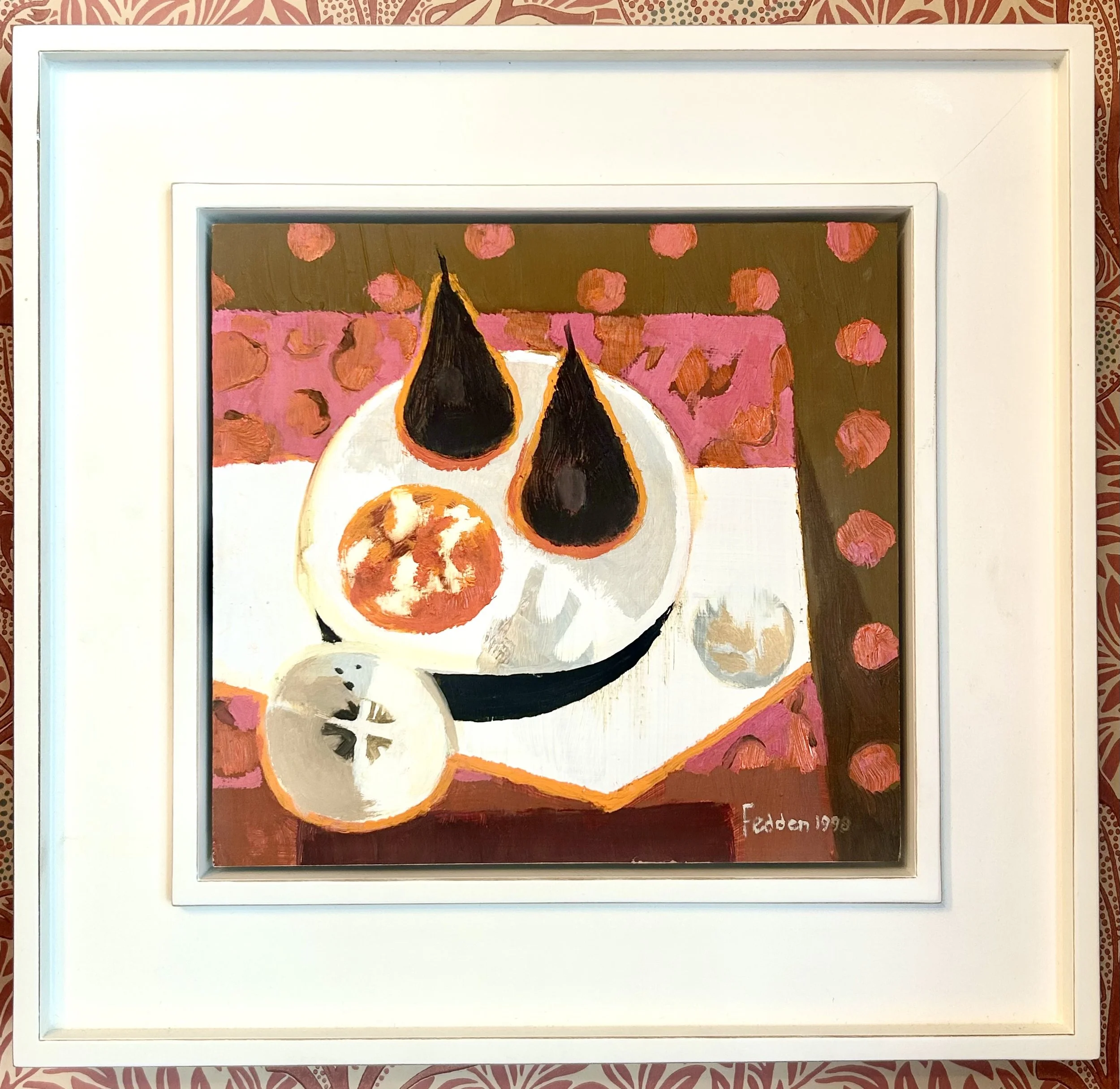
Mary Fedden (1915-2012)
Still Life, Two Pears, 1998
Oil on panel
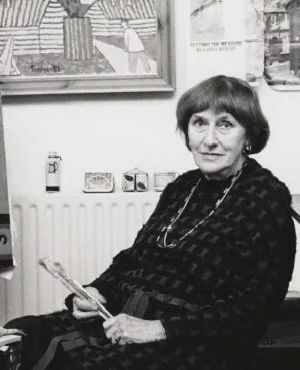
Mary Fedden was one of the country’s best loved artists, known for her charming still life and landscape paintings filled with quiet domesticity. Her chosen subject matter focused on objects of an every day nature such as cats, birds, flowers, fruit, and feathers yet she managed to elevate each item into an object worthy of depiction.
Fedden taught at the Royal College of Art from 1958 to 1964, where she was the first woman to teach in the painting school and would mentor the likes of David Hockney.
£7,500
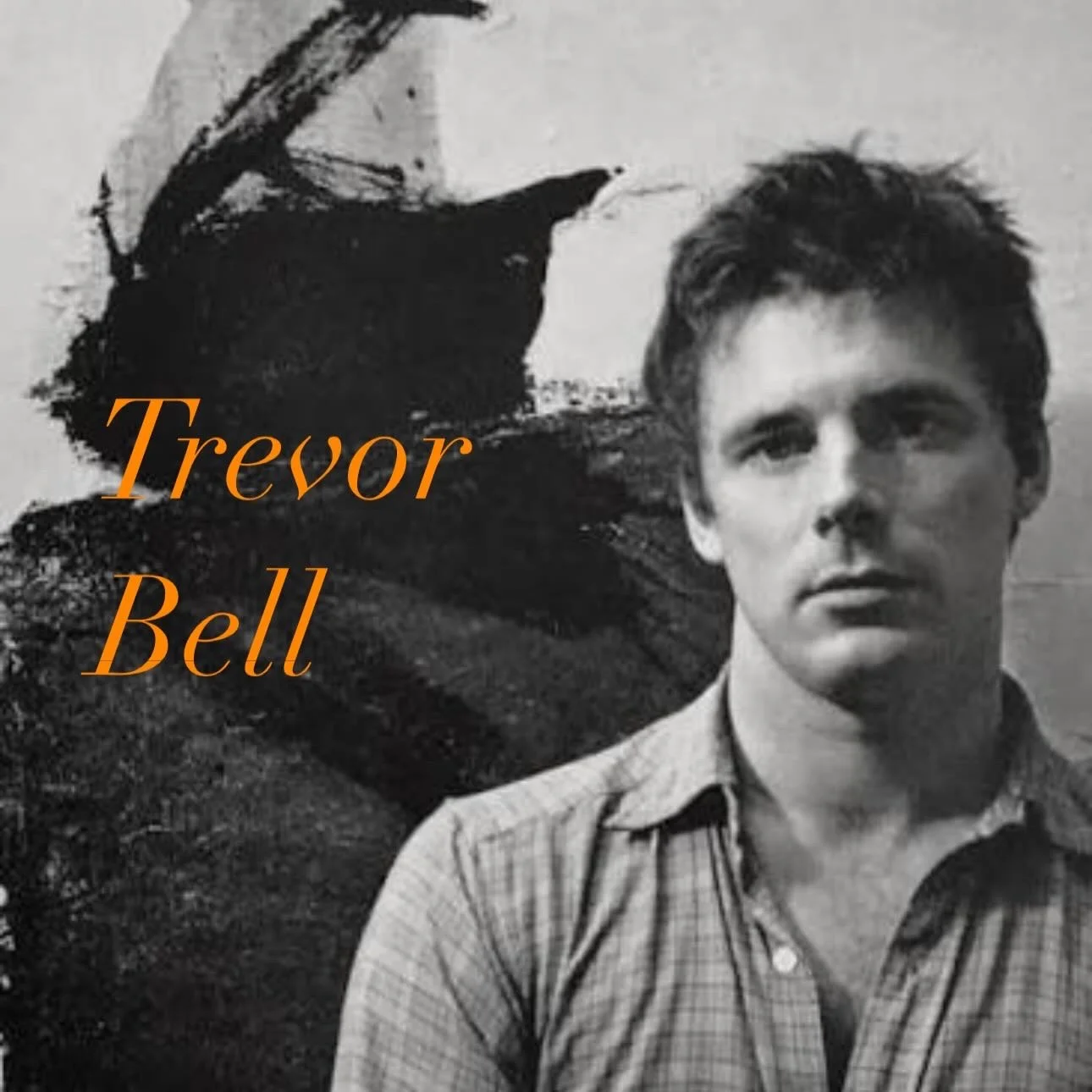
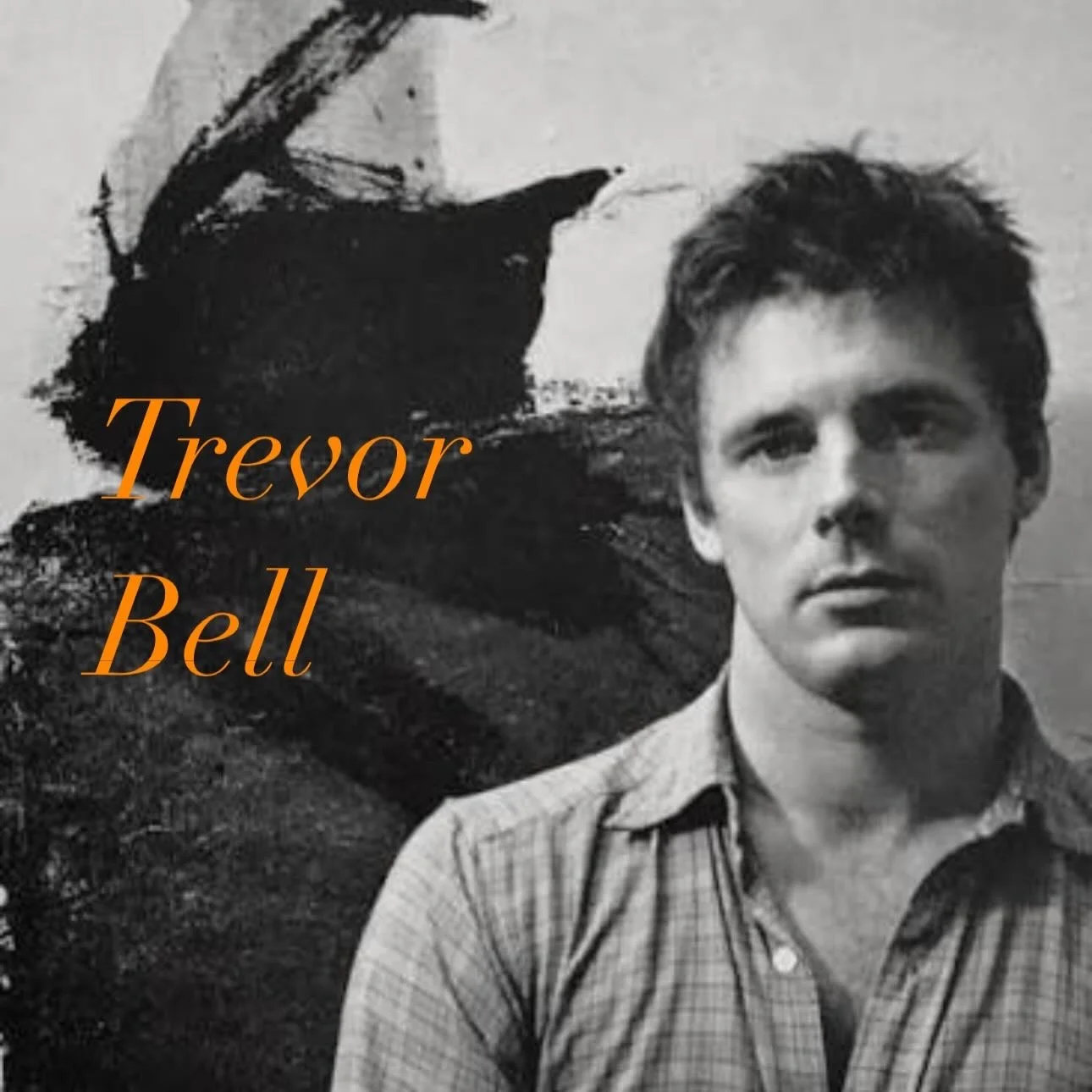
Trevor Bell (1930–2017)
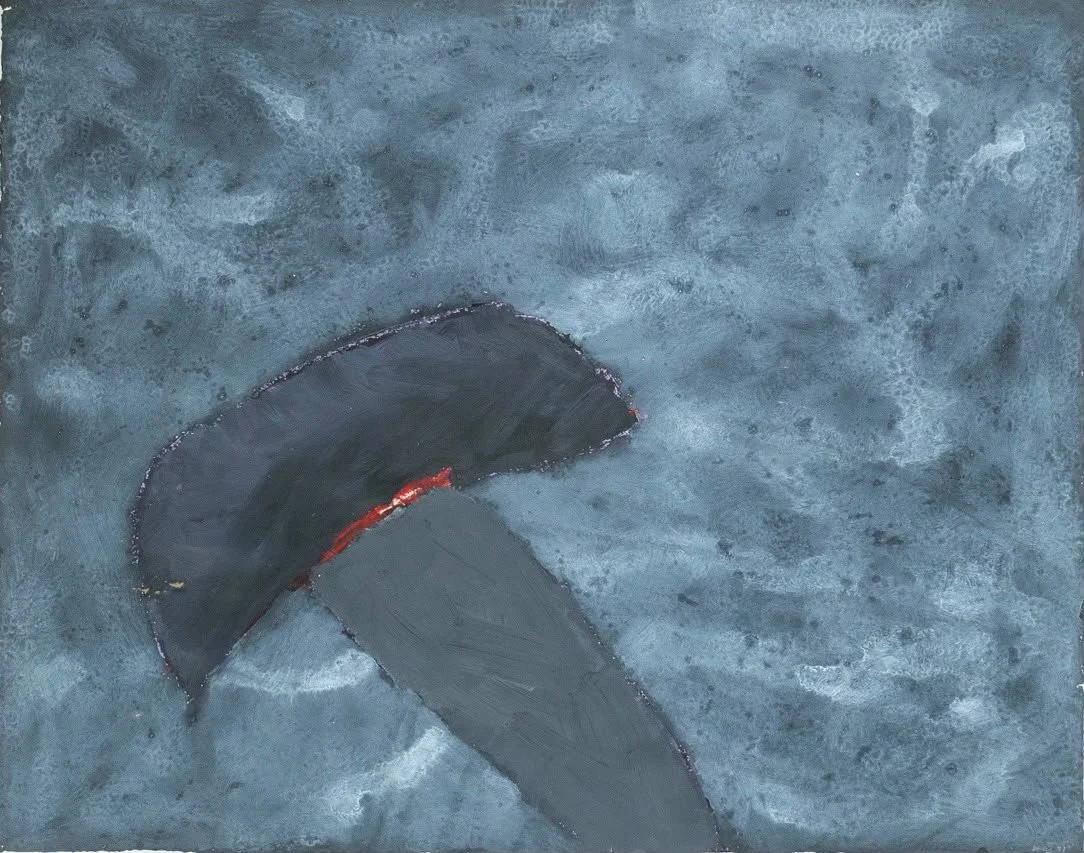
Anchor (mixed media), c.1991
Working between St Ives and Leeds, Bell developed a language of abstract forms that grew out of his experience of Atlantic light, land and sea, but did not rely on straightforward depiction. ‘Anchor’ is a striking example of the artist’s exploration of form, space, and material presence. Bell’s work invites viewers to consider balance and tension, transforming simple shapes into a bold visual statement.
Trevor Bell (1930–2017)
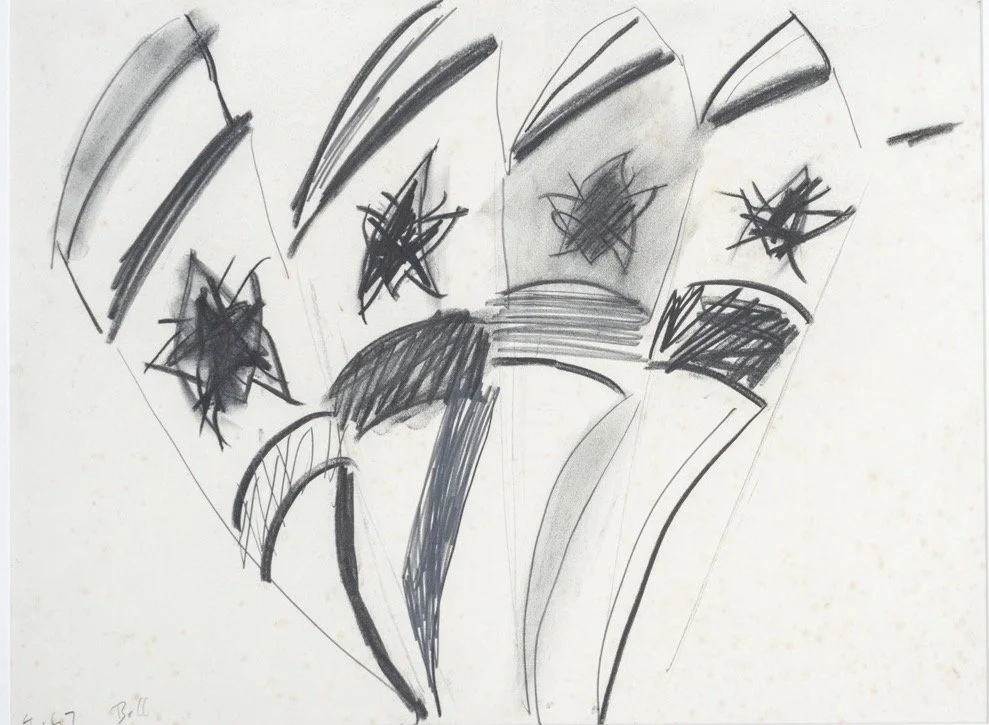
Untitled (drawing), c.1960s
Charcoal on paper
Working between St Ives and Leeds, Bell developed a language of abstract forms that grew out of his experience of Atlantic light, land and sea, but did not rely on straightforward depiction. ‘Stars and Stripes’ captures what Bell described as a search “to generate emotion by the interaction of visual forces”, using a monochrome palette to allow rhythm, pressure and movement to dominate and energise the composition.
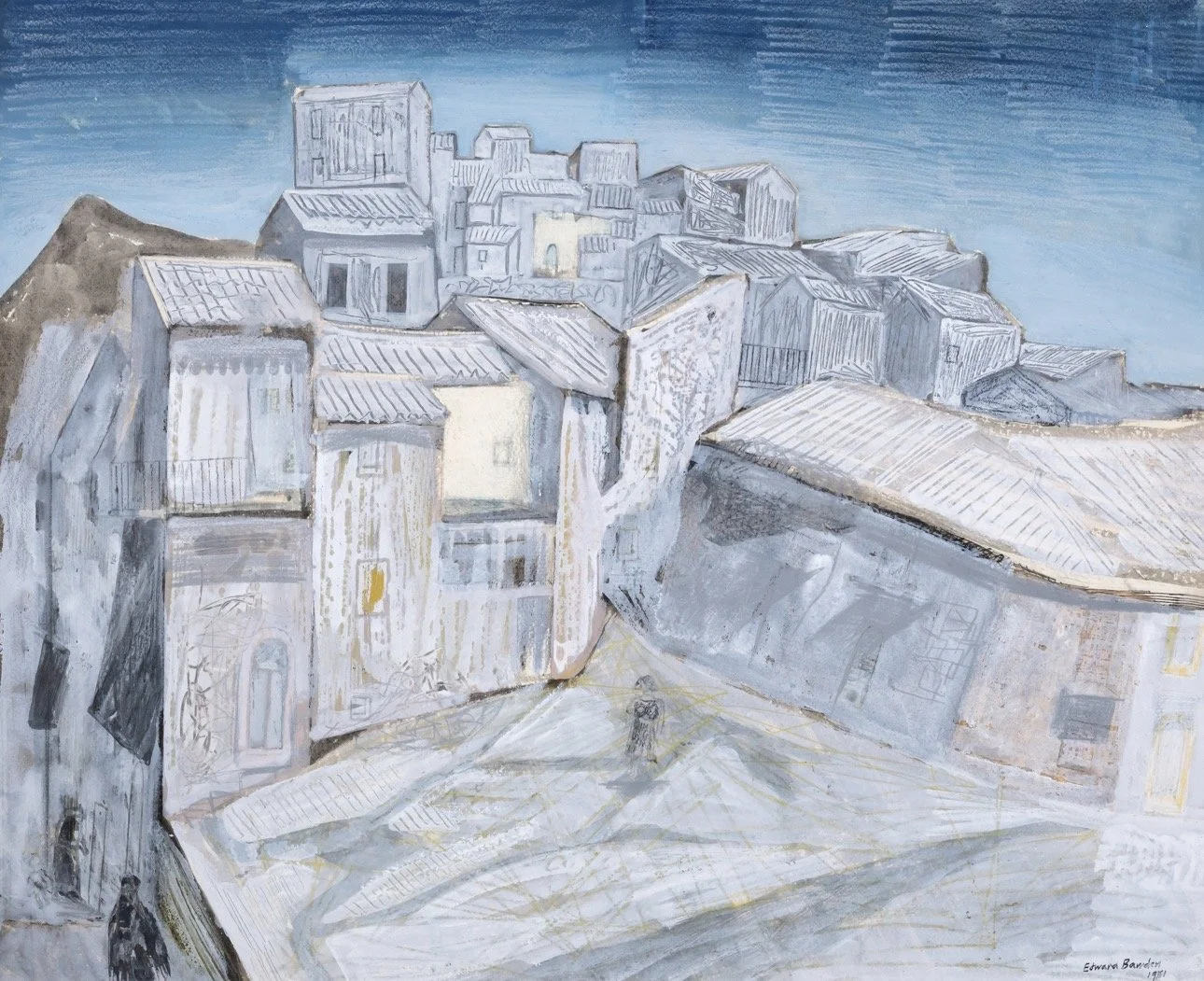
“Enna, Sicily” 1951
Gouache, watercolour and Crayon, signed and dated in black ink on wove paper, 44 × 55 cm
Provenance: By direct family decent
Exhibited: Arts Exhibition Bureau, 23 Albermarle St, London
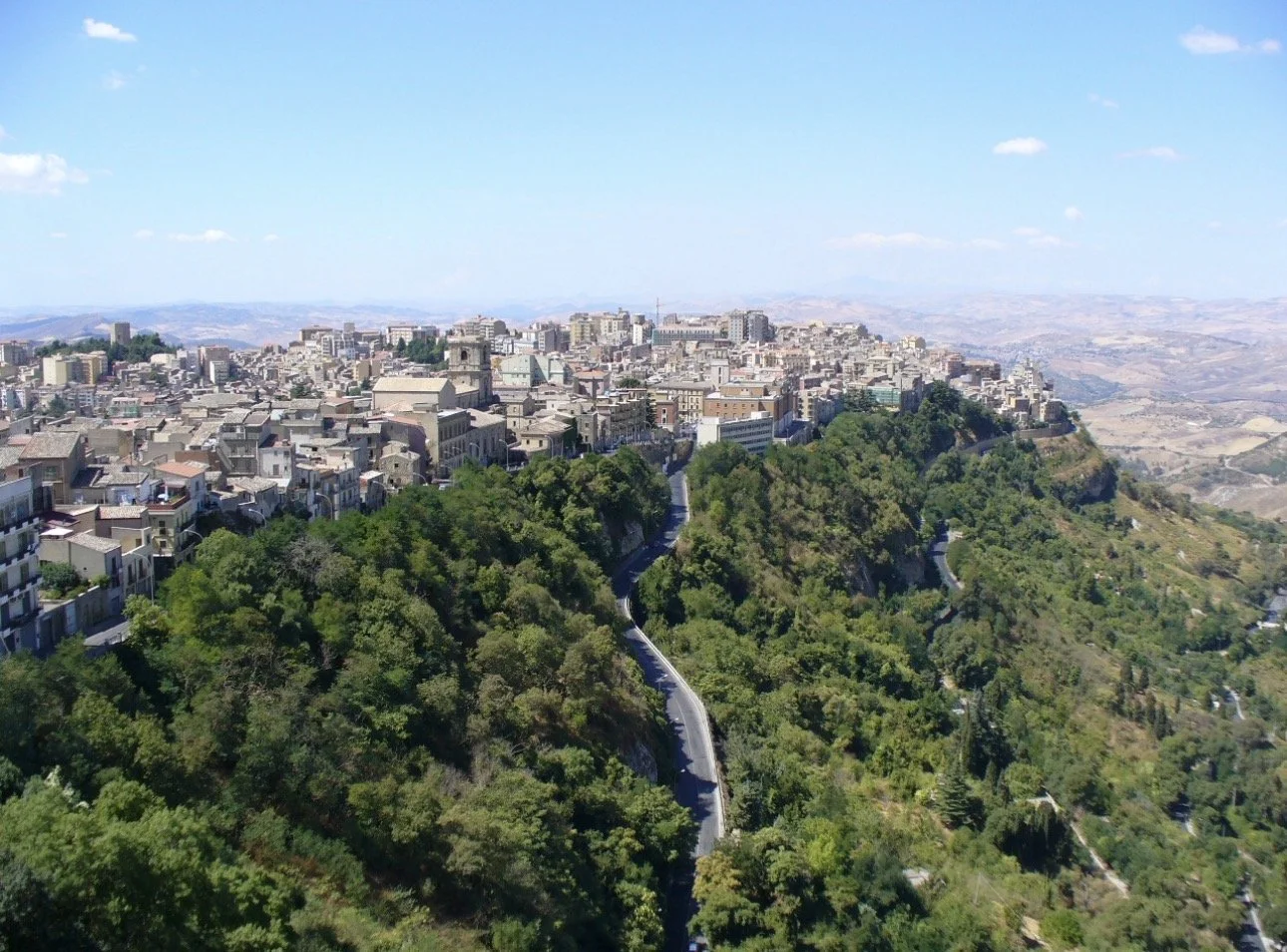
Edward Bawden was one of the most distinctive British artists of the 20th century, known for his crisp line, decorative intelligence, and ability to move easily between painting, printmaking, illustration, posters, murals, and design. His trip to Sicily in 1951 produced a notable body of work centered on Enna, the hill town in the island’s interior, where he and Walter Hoyle sought relief from the heat and dust and painted the landscape and town from above.
Bawden in Sicily
The 1951 Sicilian journey is remembered especially for the views around Enna, a dramatic hill town in central Sicily. A later account of the trip notes that the artists spent much of their time in and around Enna, and that some of the resulting works were later shown in exhibitions, including a 1952 one-man show and a later Fry Art Gallery display devoted to Enna watercolours and drawings. The subject suited Bawden well: he had a gift for distilling places into clear shapes, strong structure, and lively pattern rather than simply reproducing topographical detail.
Why he matters
Bawden matters to British art because he helped define a modern British visual language that was both practical and poetic. He was a major graphic artist as well as a painter, and his work for books, posters, murals, and public commissions helped shape everyday British visual culture across the mid-20th century. He also bridged the gap between fine art and applied art, which is one reason he remains so admired: his work was inventive without losing clarity, and stylish without becoming cold.
Museums with his work
Bawden’s work is held in many public collections, including these museums and galleries:
• Tate
• Victoria and Albert Museum
• Imperial War Museums
• Fry Art Gallery, Saffron Walden
• The Higgins Bedford
• The Ingram Collection of Modern British and Contemporary Art at The Lightbox, Woking
A brief note on style
What makes the Enna pictures appealing is that they show Bawden at full strength: structure, observation, and atmosphere working together. Rather than chasing grandeur, he turned a hill town into a composition of planes, contours, and light, which is exactly the sort of visual intelligence that made him one of the most respected British artists of his generation.
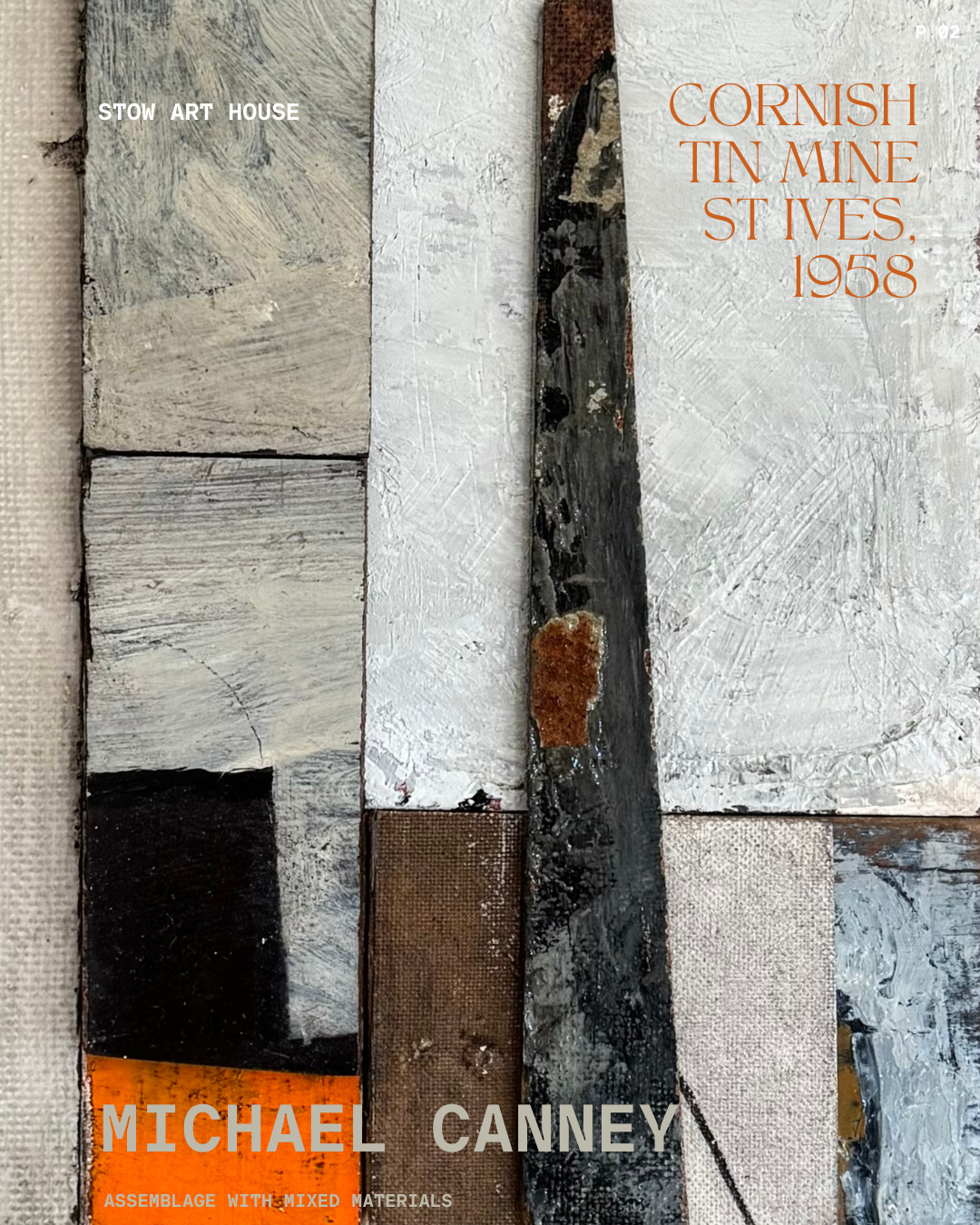
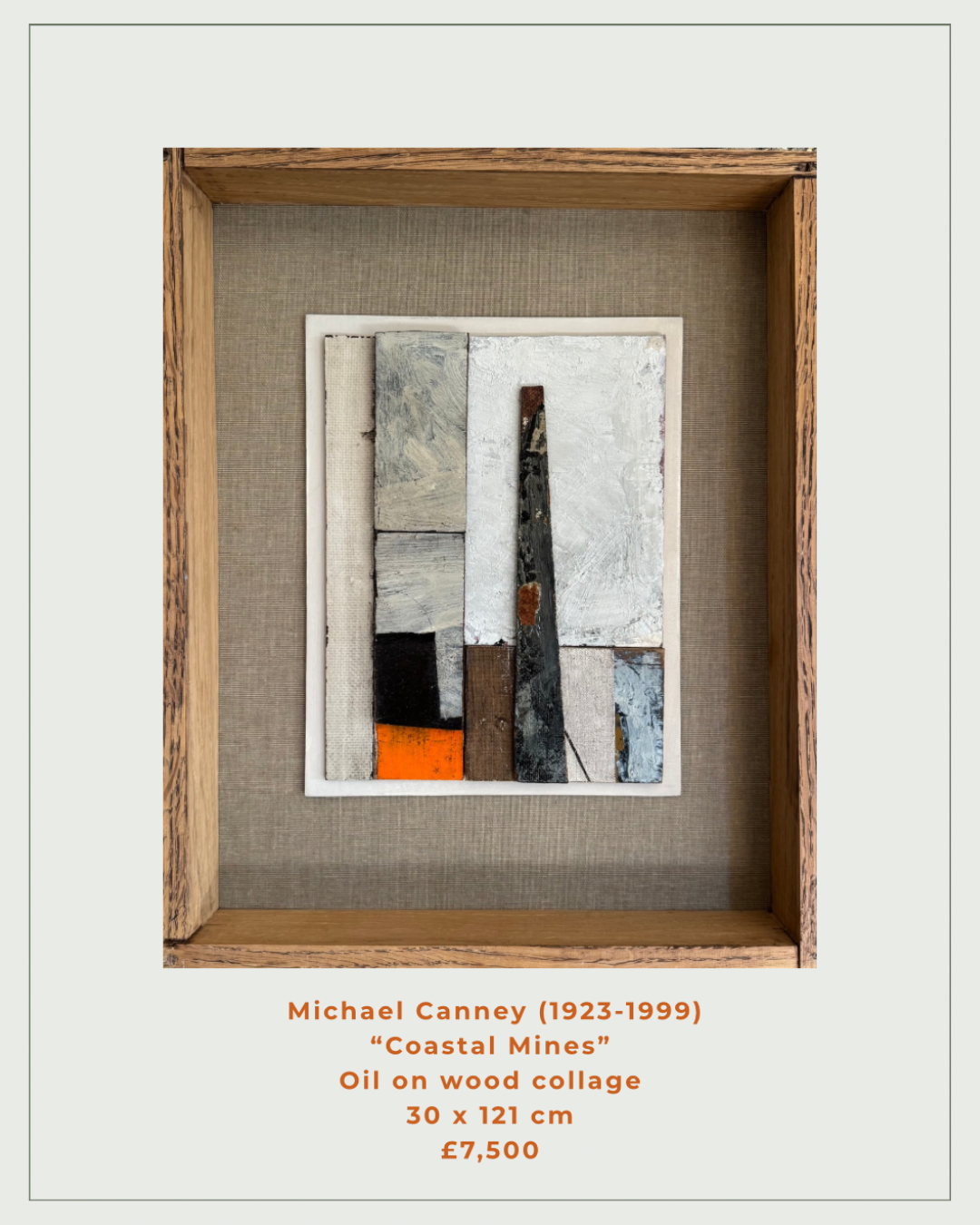
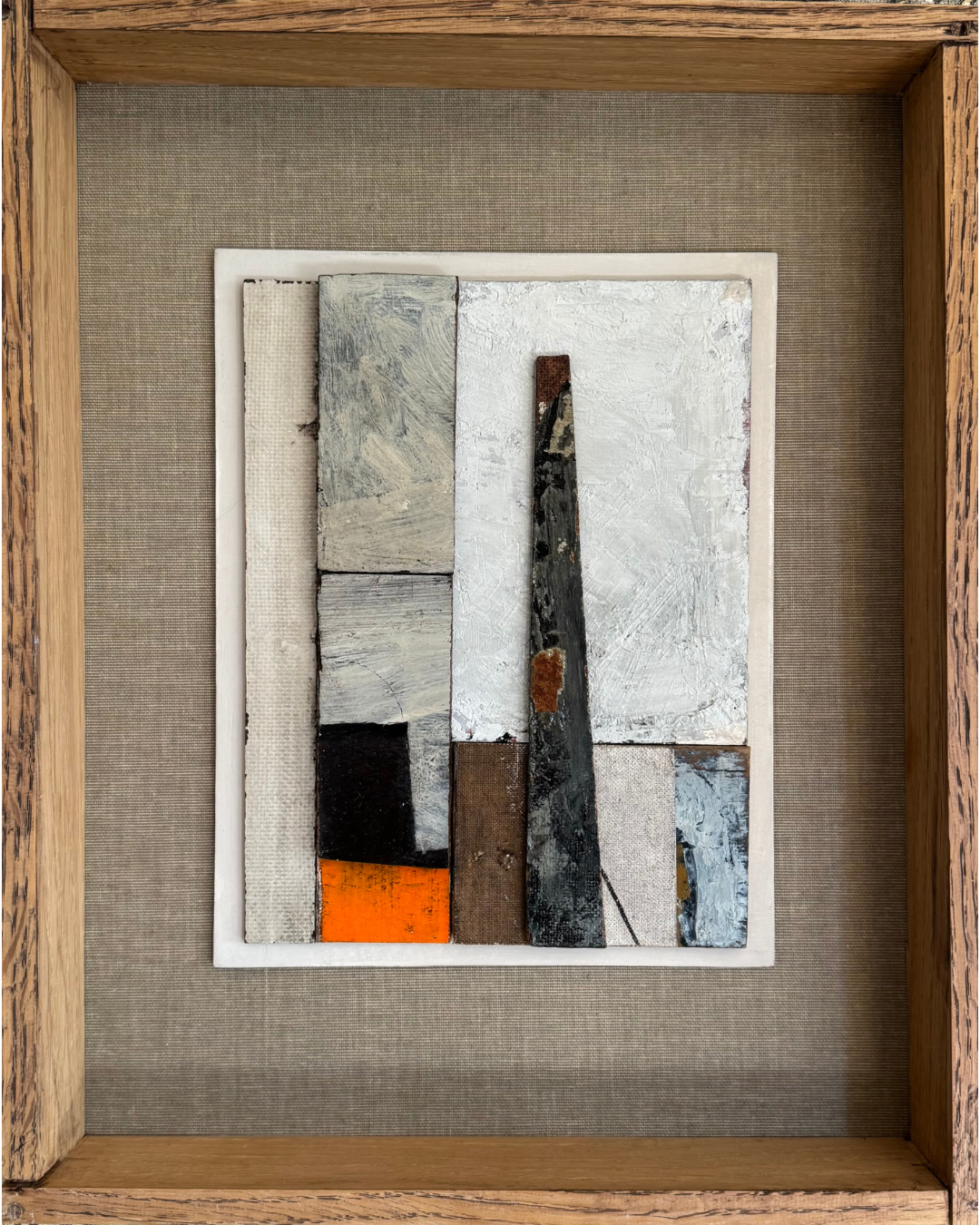
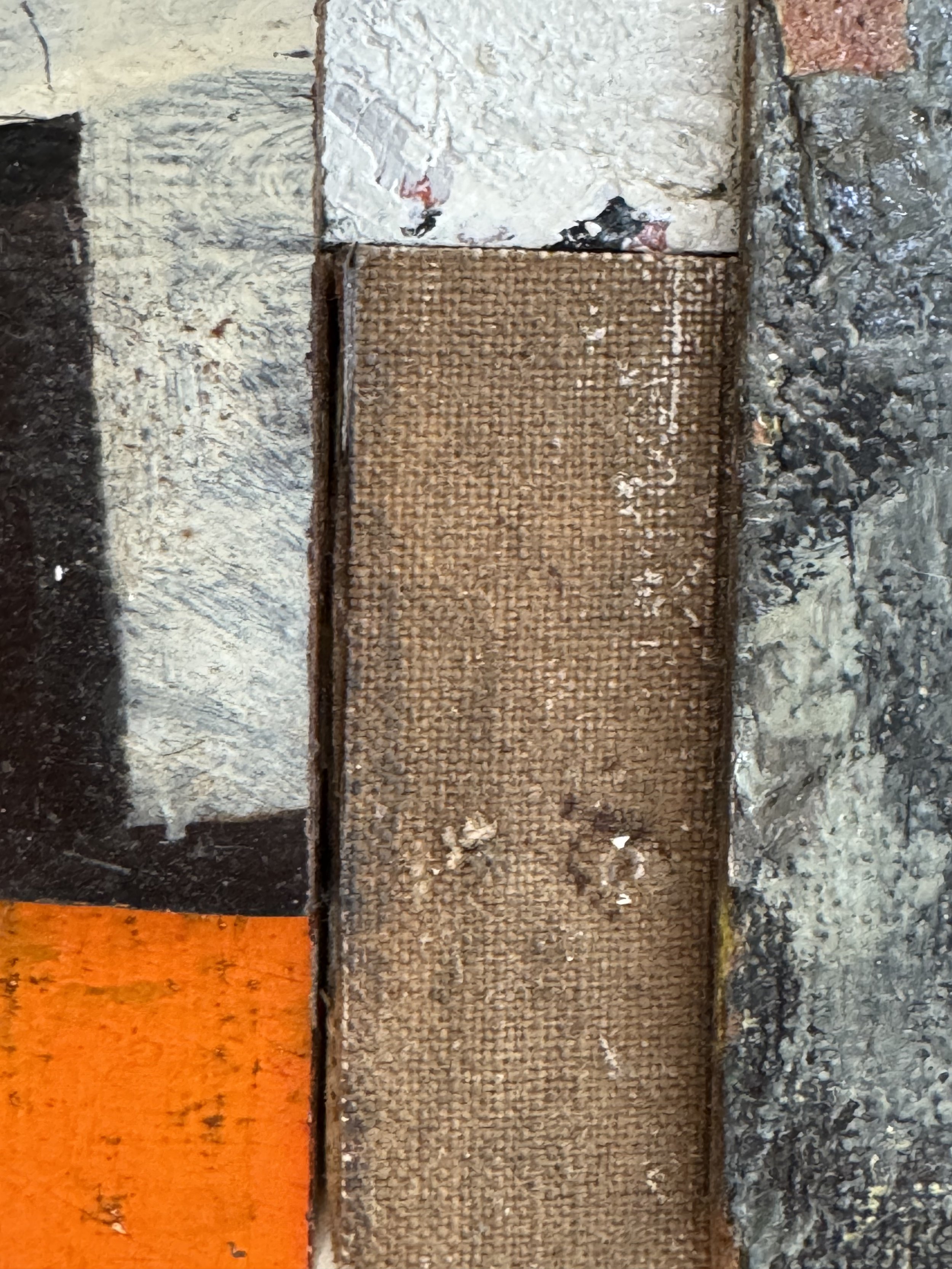
‘Cornish Mine’
1956
Assemblage by Michael Canney
Michael Canney’s work in Cornwall in the 1950s was shaped by the Cornish landscape and coast, which helped move his painting away from earlier, more figurative approaches toward increasingly abstract compositions. The rhythm of the land, the sea, and the generation of form in the local environment became central to his art, so even when his work simplified into abstraction it still felt rooted in Cornwall’s light, contours, and coastal atmosphere. By the late 1950s, that relationship with place had become a key force in his development, giving his paintings both structure and a strong sense of local identity.
The St Ives environment encouraged Canney toward a more modern, abstract language because it placed him among artists who treated landscape as a source of form, colour, and structure rather than simple description. Working in a town shaped by strong light, rugged coastline, and an active artistic community, he absorbed the St Ives emphasis on reducing the scene to essential shapes and relationships, while still keeping a clear connection to Cornwall. In Canney’s case, that setting seems to have helped him move between observation and abstraction, so the local environment was not just a subject but a catalyst for simplifying and clarifying his style.
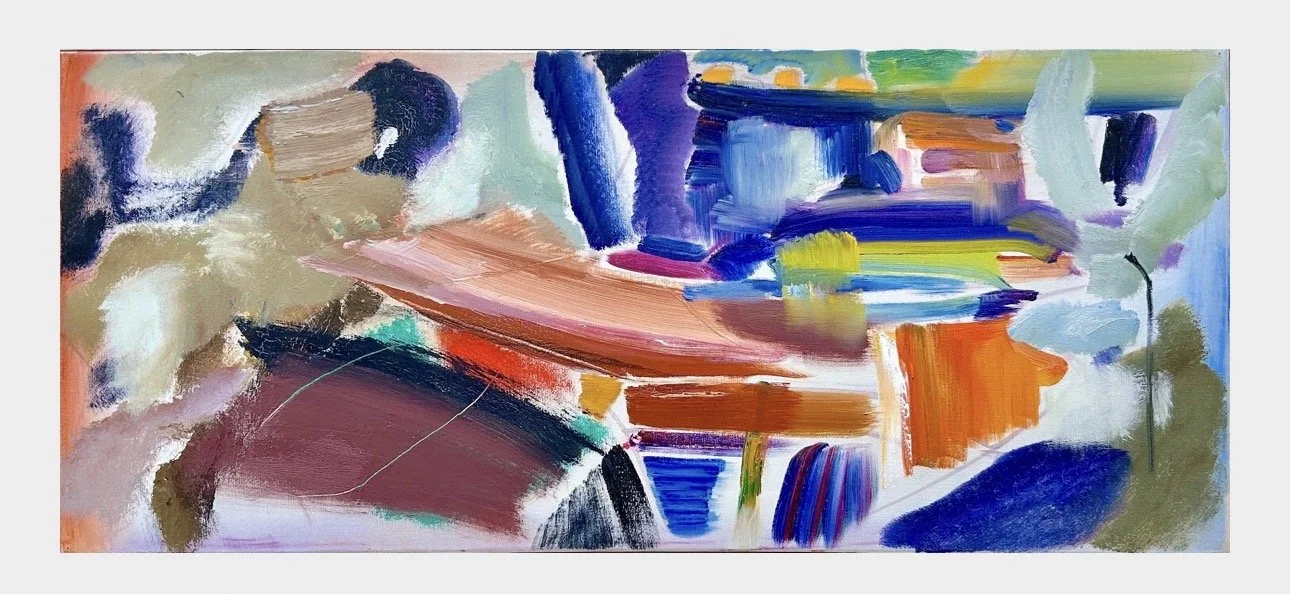
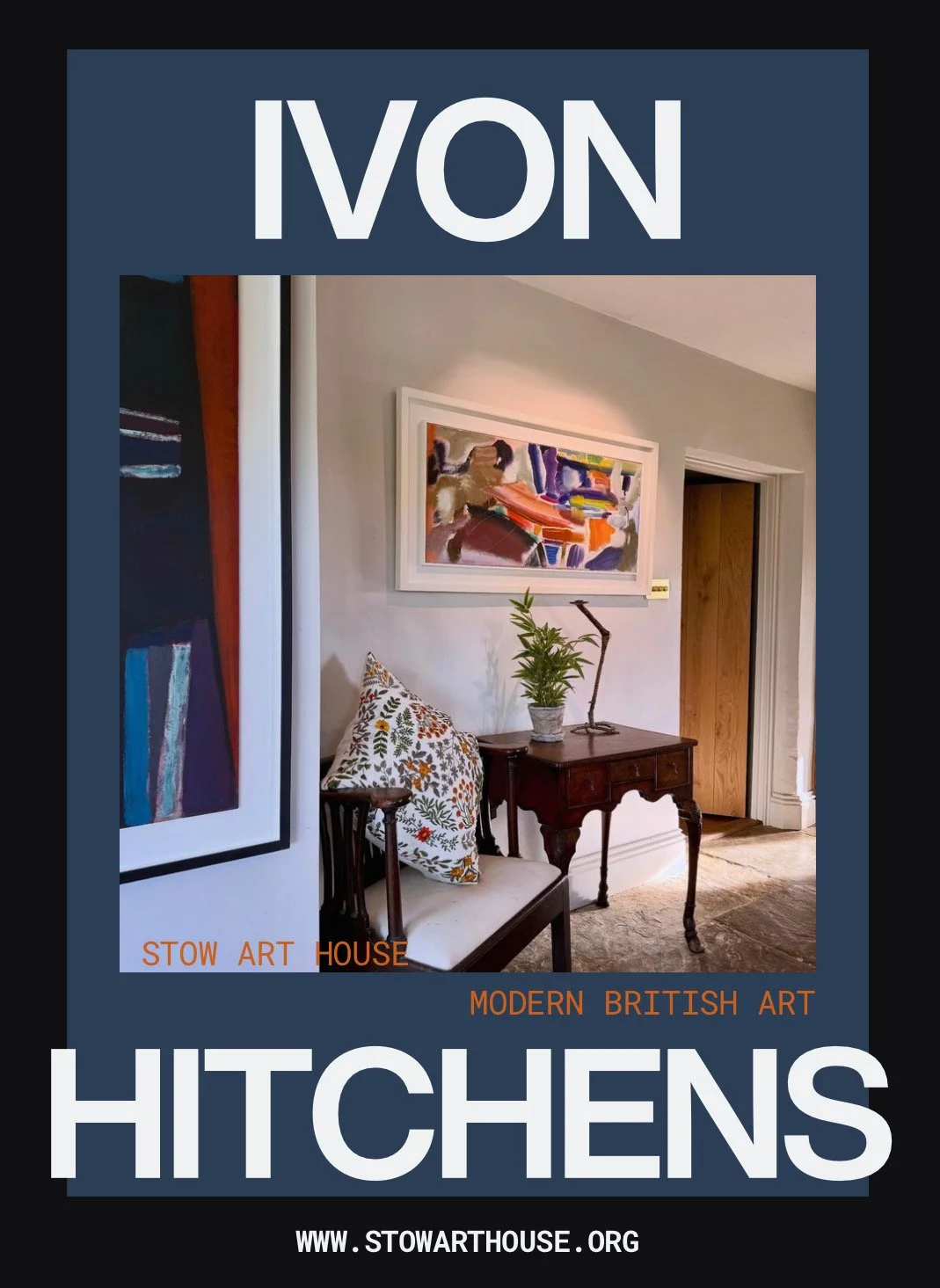
Ivon Hitchens CBE (1893-1979)
Untitled
Oil on canvas
45 × 105 cm
Born in London, Ivon Hitchens trained at St John’s Wood School of Art and the Royal Academy Schools before becoming a leading artist in British Modernism. Hitchens was a dedicated founding member of the Seven and Five Society, which began as a traditional group but gradually transformed into a pioneering organisation, presenting Britain’s first all-abstract art exhibition in 1935.
After moving to woodland near Petworth in West Sussex during the Second World War, he was greatly inspired by the surrounding countryside and translated the rhythms of trees, water and light into energetic brushstrokes of intense colour across panoramic canvases. His work is widely celebrated for its considered balance of observation with abstraction and is represented in major collections including Tate, the Arts Council and the Government Art Collection.
Hitchens was appointed CBE in 1958 in recognition of his contribution to modern British painting.
POA (Price on application)
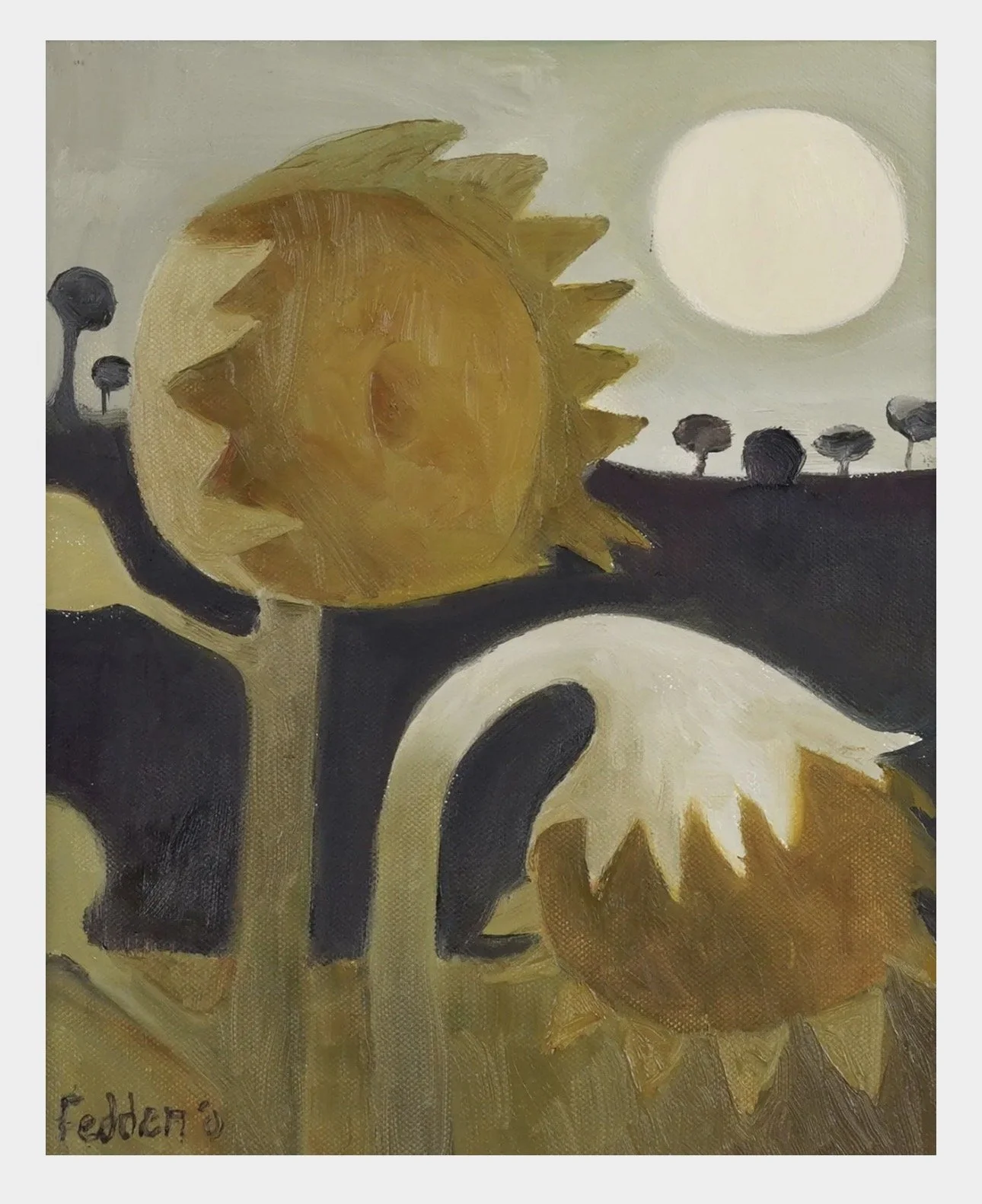
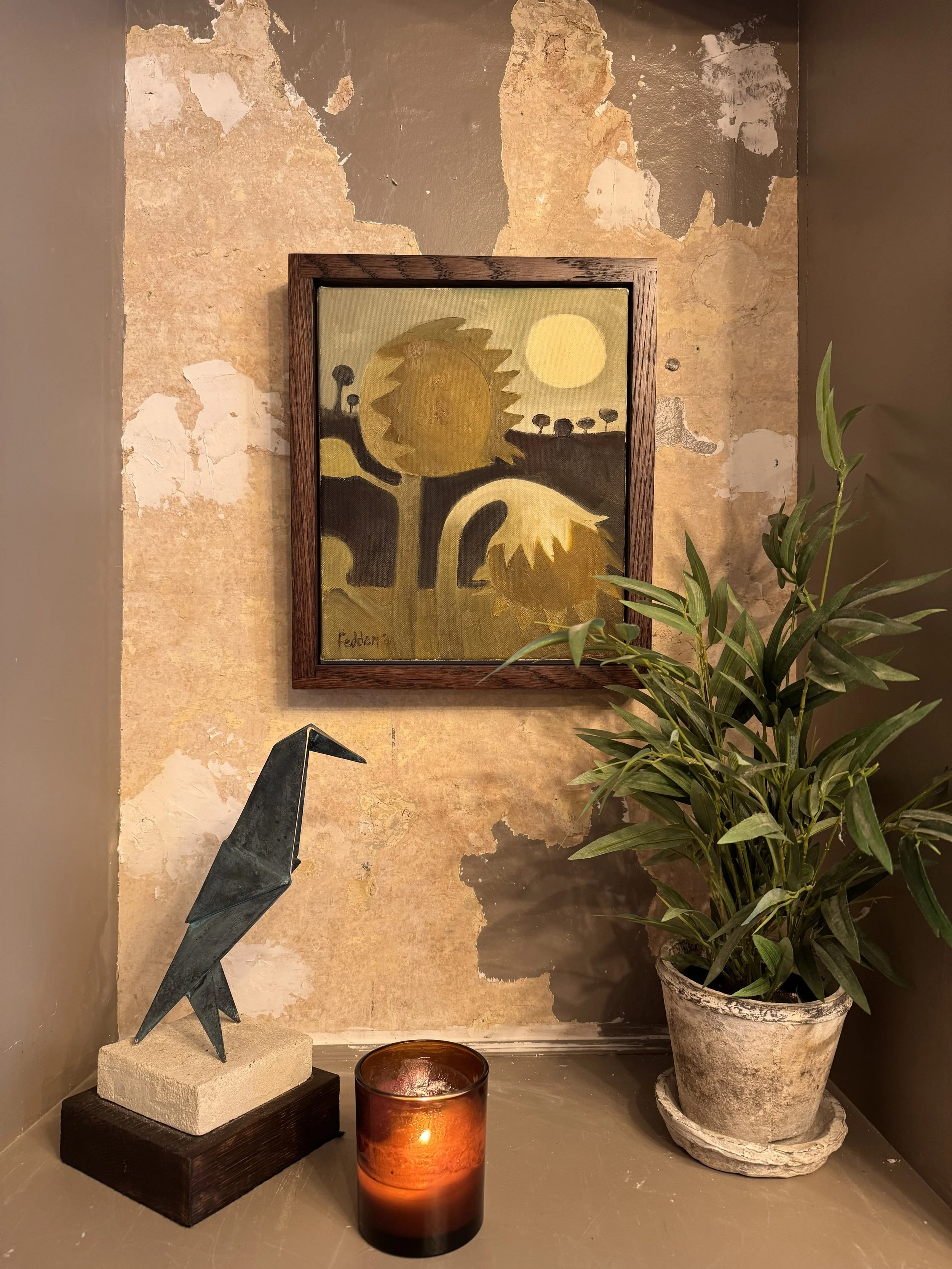
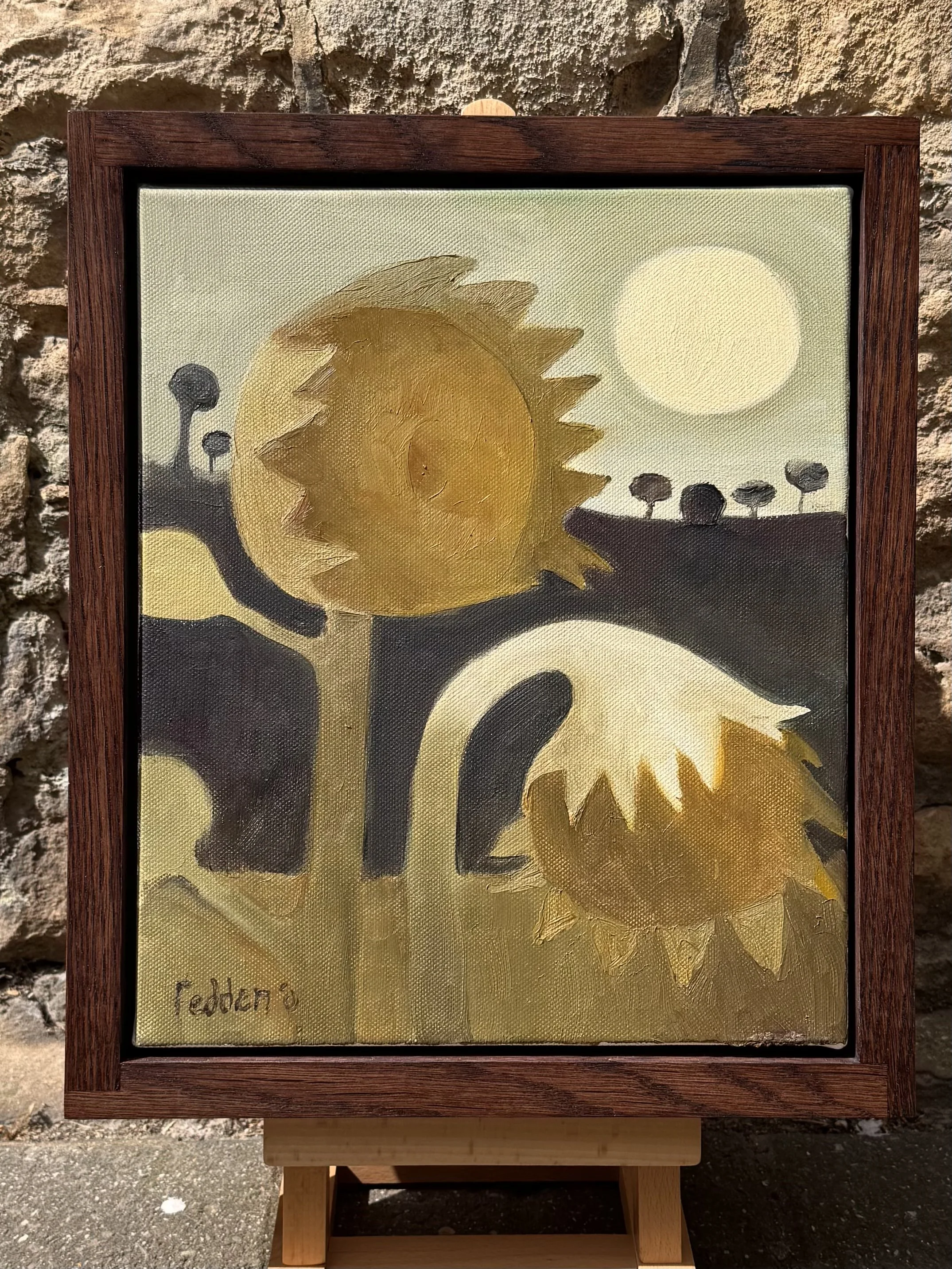
Mary Fedden OBE RA (1915-2012)
Sunflowers
Oil on canvas
Mary Fedden, born in Bristol in 1915, quietly shaped the story of 20th-century British art. After training at the Slade School of Fine Art, she developed a style that seemed both structured and slightly offbeat, which is exactly what made it so distinctive. Her career spanned decades, and so did her influence, especially through her teaching roles at the Royal College of Art, where her students included David Hockney.
Fedden painted right up until her final years, never straying far from her preferred subjects: still life, seaside scenes, and those famously expressive cats. As a female British artist working in what was still very much a male-dominated art world, she carved out a reputation that felt entirely her own. Collectors still seek out Mary Fedden paintings for their mix of wit, elegance, and emotional accessibility; a balance not easily found.
She married fellow artist Julian Trevelyan in 1951, and the two shared a Thames-side studio at Durham Wharf for decades. Fedden was elected President of the Royal West of England Academy between 1984 and 1988, and later became a Royal Academian on 27th May 1992. She continued painting well into her nineties and sadly passed away in 2012, aged 96.
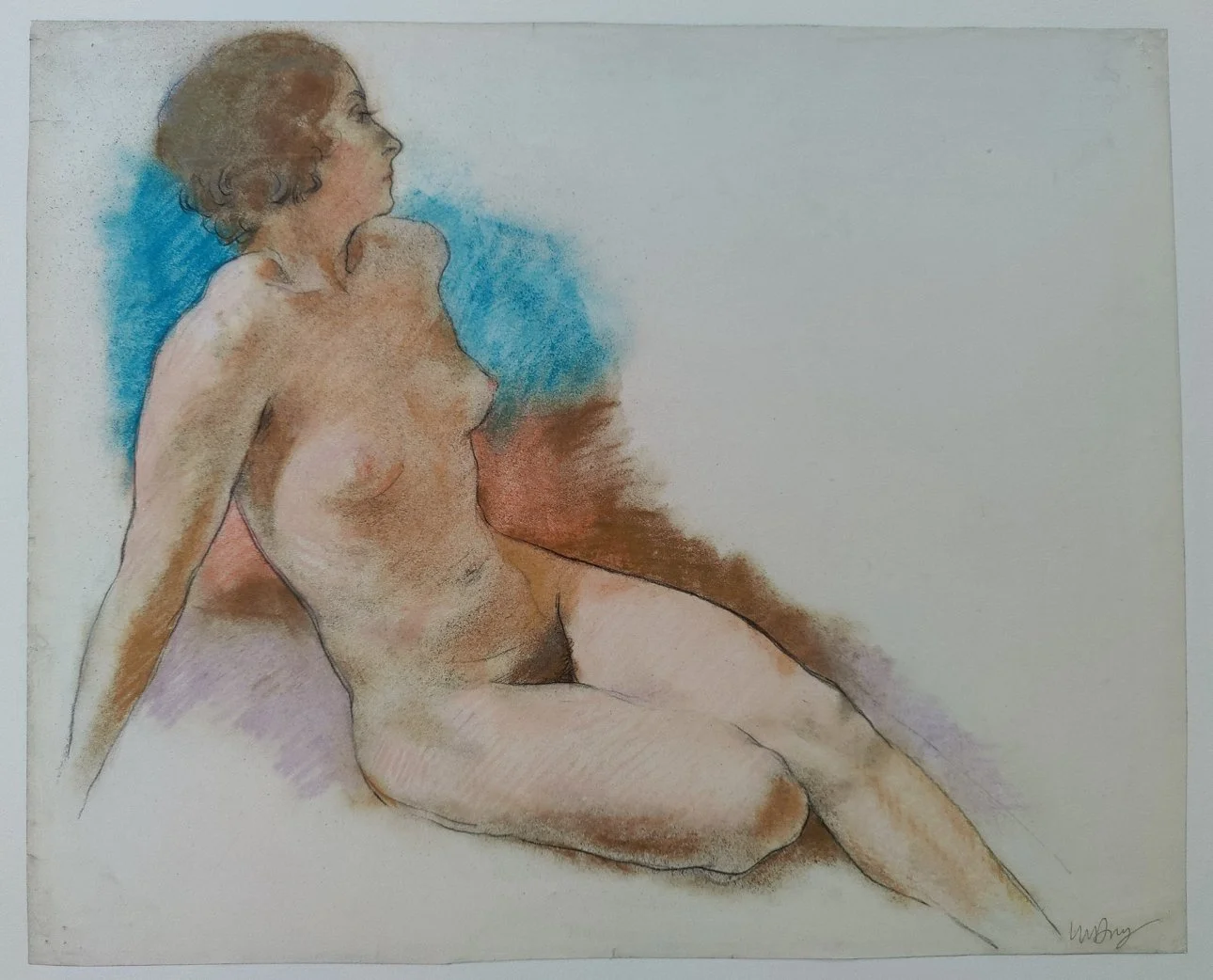
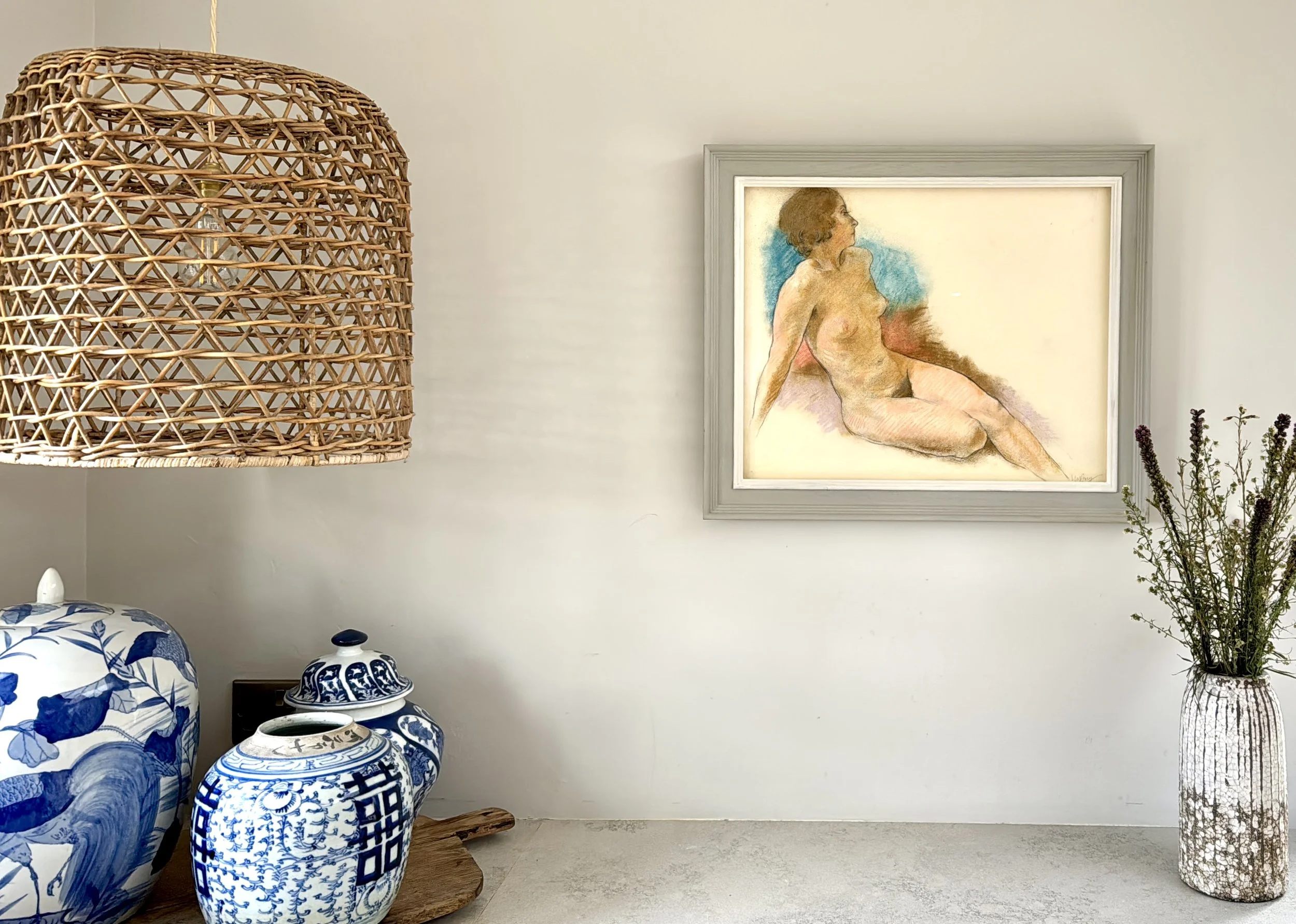
William Dring, RA, RWA (1904-1990)
Pastel on paper
William Dring was a skilled technician, who produced realistic, restrained and smoothly executed images – both as a painter in oil and watercolour, and as a draughtsman, particularly in pastel. While he developed a strong reputation as a sympathetic portraitist – with sitters ranging from family members to the Prince of Wales –
he essayed a range of subjects, including landscape and still life.
William Dring, known familiarly as John, was born at 33 Kingscourt Road, Streatham, London, on 26 January 1904, the eldest child of William Henry Dring, a compositor for a daily newspaper, and his wife, Ellen (née Croft). His younger brother, James, would also became an artist.
Following schooling in Streatham, Dring studied at the Slade School of Fine Art, between 1922 and 1925, under Henry Tonks. While there, he won several prizes and scholarships – including those for decorative painting and figure drawing – and emerged as a fine draughtsman and painter. His fellow student, Grace Elizabeth Rothwell, known as ‘Gray’, would become his wife.
Following their marriage in 1931, William and Gray Dring moved to Hampshire and, by 1935, had settled at Kenelm’s Cottage, Shawford, south of Winchester. Together they would have one son and two daughters, including Elizabeth, who also became an artist. He taught at Southampton School of Art (and possibly the Southern College of Art, Portsmouth). During the decade, he not only established himself as a portraitist and genre artist in pastels and oils, but was also inspired by the Hampshire countryside to paint landscapes in watercolour. The success of these led to his election as an Associate of the Royal Society of Painters in Water-Colours in 1942. (He would become a full member in 1957.)
Following the outbreak of the Second World War, Dring began to receive commissions from the War Artists’ Advisory Committee. Then, in early 1942, he was appointed an Official War Artist to the Admiralty. He travelled extensively across Britain, producing pastel portraits in Portsmouth, Scotland and the Western Approaches. In late summer 1943, he received a second full-time contract that included more general subjects. His third and final contract, in 1944, led him to produce portraits for the Air Ministry.
By the end of the war, Dring and his family had moved to Windy Ridge, Compton, west of Shawford (and this would remain his home for the rest of his life). Having been elected an Associate of the Royal Academy in 1944, he soon became a noted exhibitor at the RA, and also took up a position as an assistant teacher at the Royal Academy Schools, where he gained a reputation for exacting standards. A decade later, in 1955, he was elected a full Royal Academician. He also exhibited with leading London dealers, especially Agnews.
Increasingly, Dring focussed on his work as a portraitist, and received many commissions for official portraits – including Sir Oliver Franks in 1962 and the Prince of Wales in 1973 – as well as depicting royal occasions.
Agnews mounted a major retrospective of Dring’s work in 1990. However, he was unable to attend due to illness, and died later the same year, on 27 September.
His work is represented in numerous public collections, including the Imperial War Museums and the National Maritime Museum.
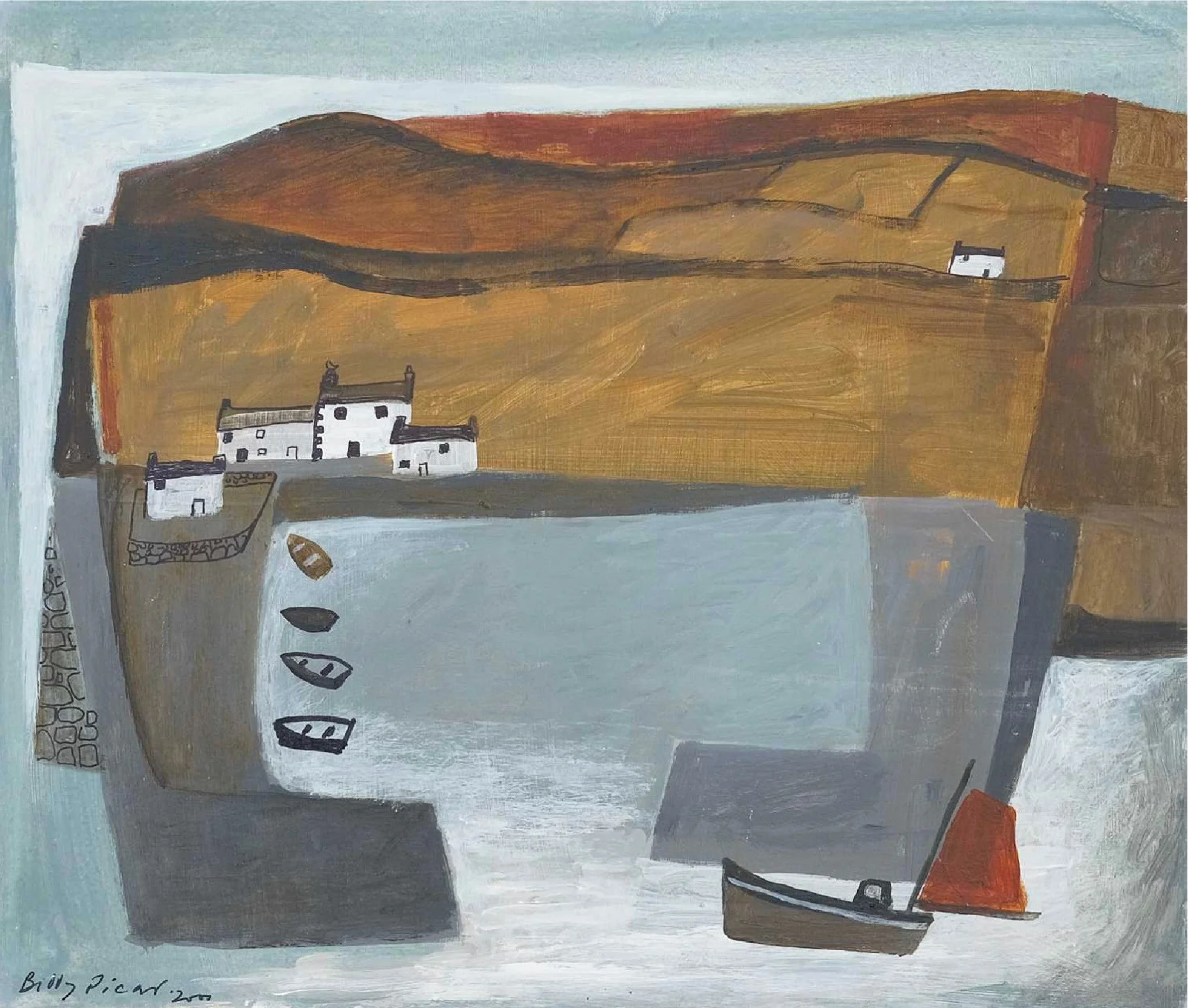
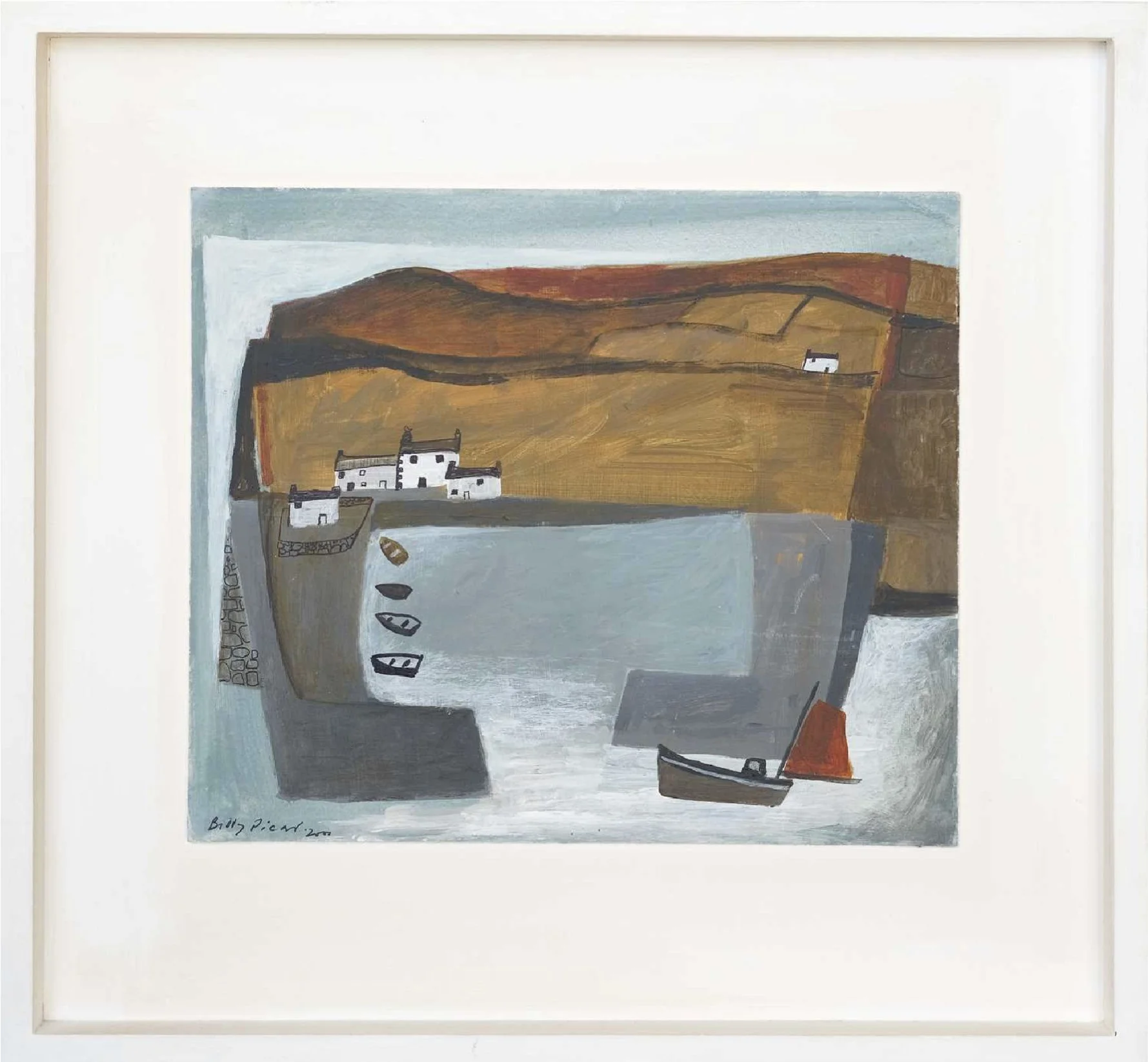
Grey Harbour
Oil on board
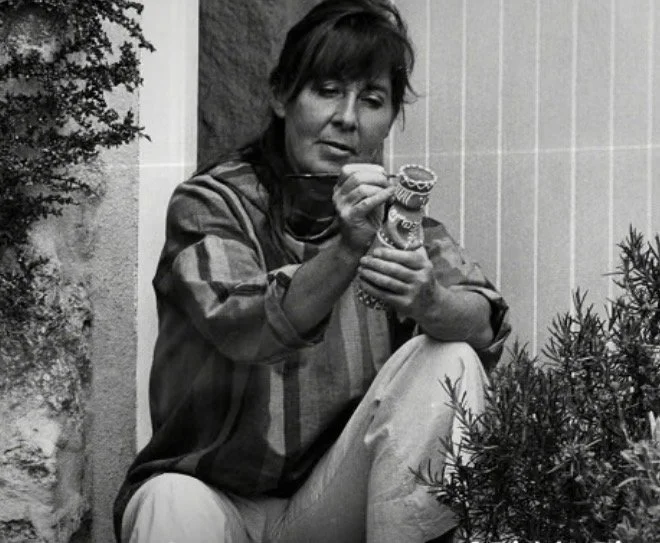
Picard was born in Derbyshire in 1922 and trained at Chesterfield School of Art and then the Slade during the war. She arrived in West Cornwall after the war on a French fishing boat and lived in Lamorna valley, followed by Mousehole where she ran a pottery studio with her husband.
Picard taught painting and ceramics at Penzance School of Art and was a longstanding member of the Newlyn Society of Artists. Her colourful, semi-abstract works of West Cornwall are exhibited in galleries across the country and the Penlee Museum held a large retrospective in 2025.
Picard’s ‘Grey Harbour’ uses a soft, restrained palette and simplified forms to turn an ordinary working harbour into a quietly atmospheric scene. Rather than focusing on accurate details, Picard lets the harbour dissolve into blocks of light and shade, inviting the viewer to feel the mood of the place rather than reading its exact geography.
£3,900
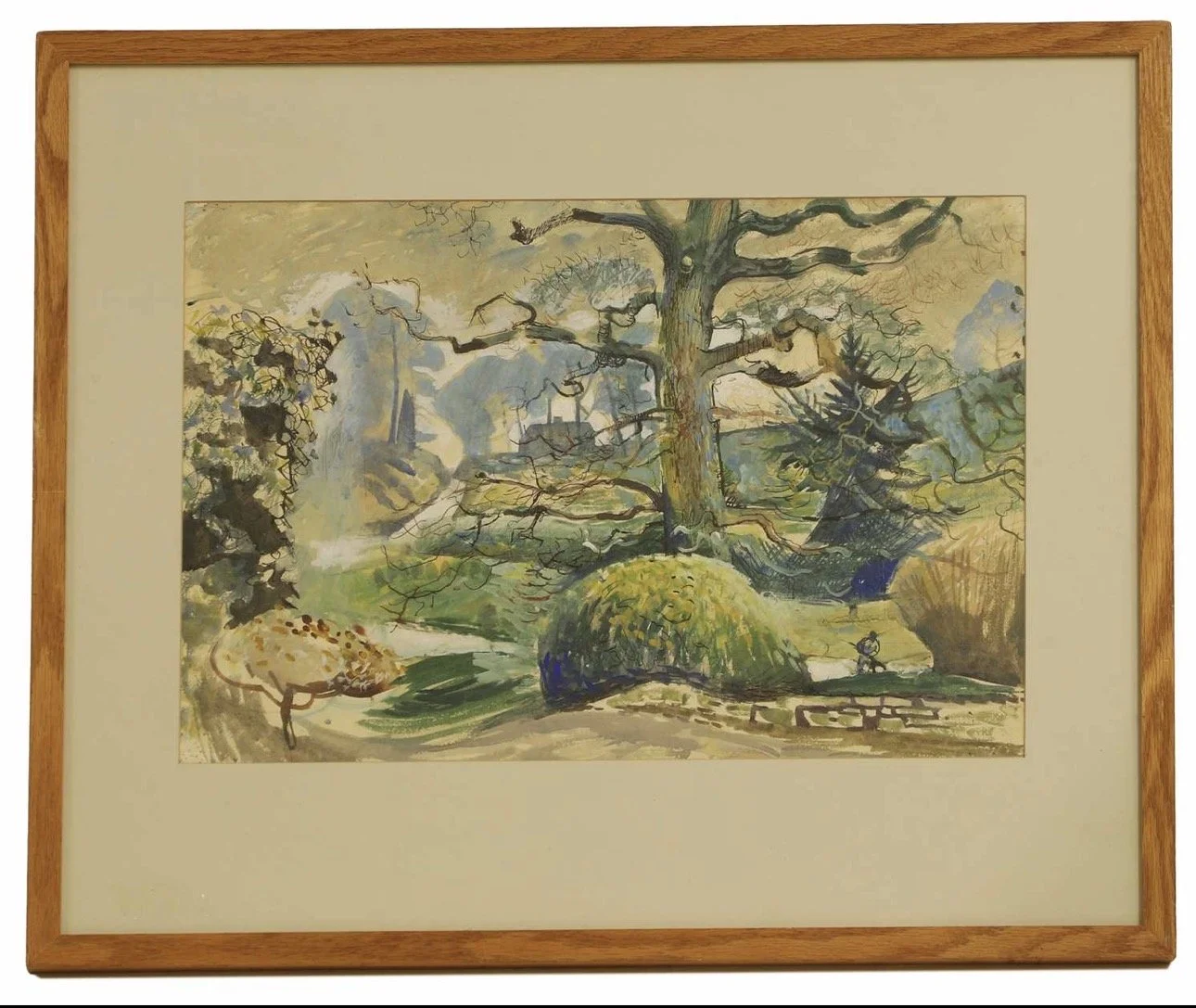
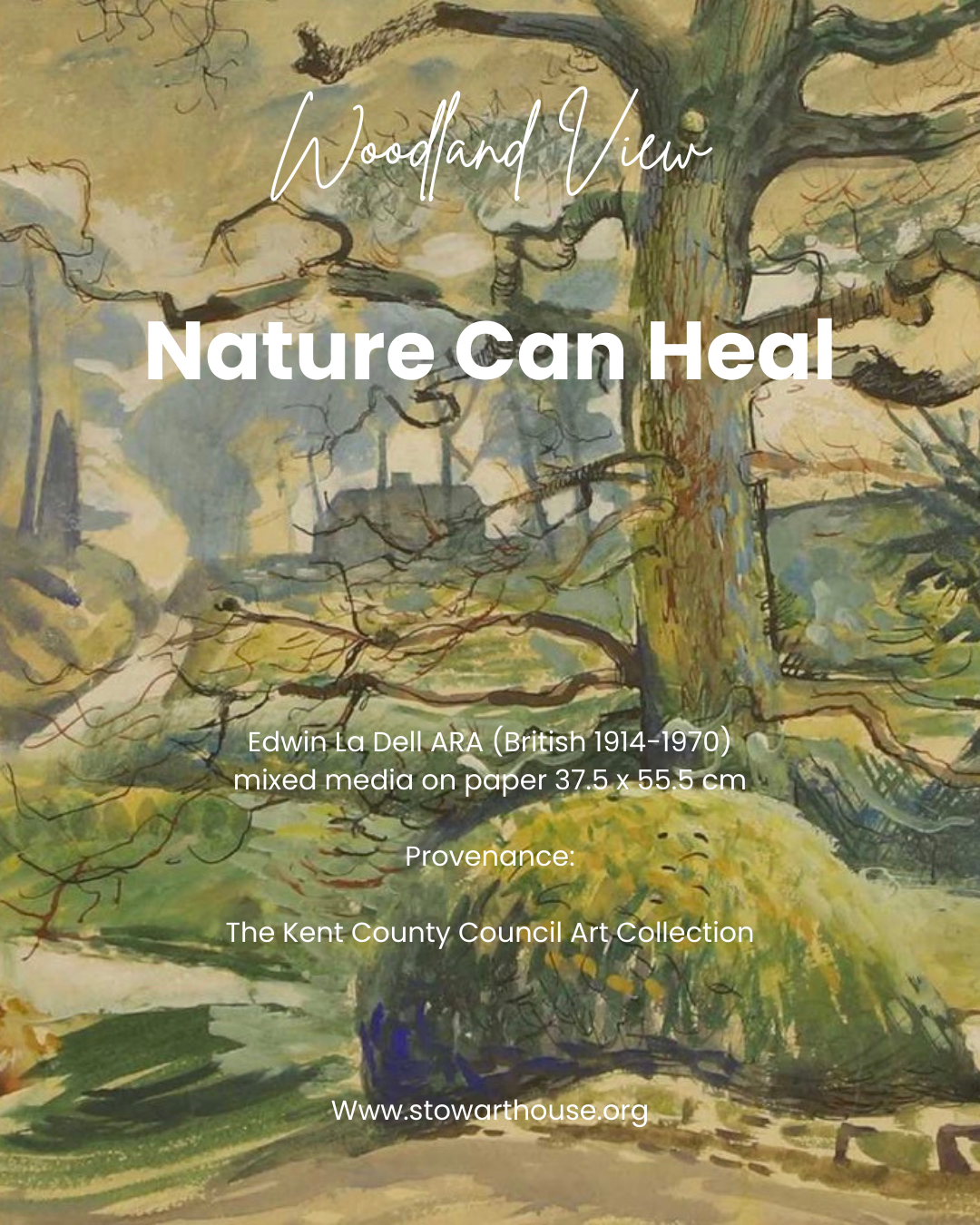
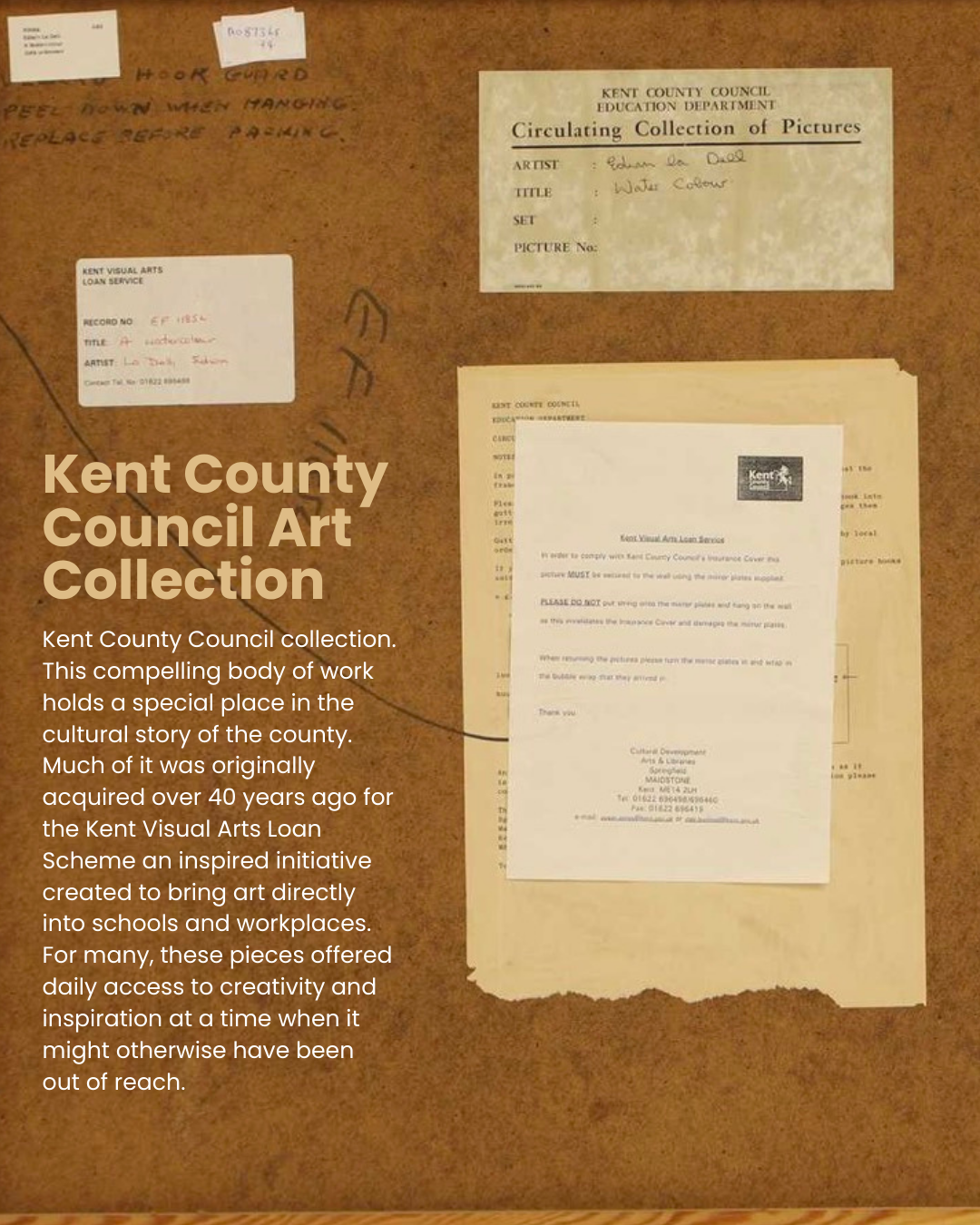
Born in Rotherham, Yorkshire, he attended Sheffield School of Art. In 1935 he won a scholarship to the Royal College of Art under John Nash. He later became head of the Department of Lithography at the College from 1948 until his death.
La Dell was appointed as an official war artist during the Second World War, working on both public murals and camouflage,[1] but his best known works are those from the post-war era, in particular the lithographs he created for the coronation of HM The Queen, for the School Prints scheme and for Lyons Tea Rooms.
His work is currently held in many collections, including those of the Royal Academy, the Government Art Collection and the V & A.
Gertrude HARVEY (1889-1966)
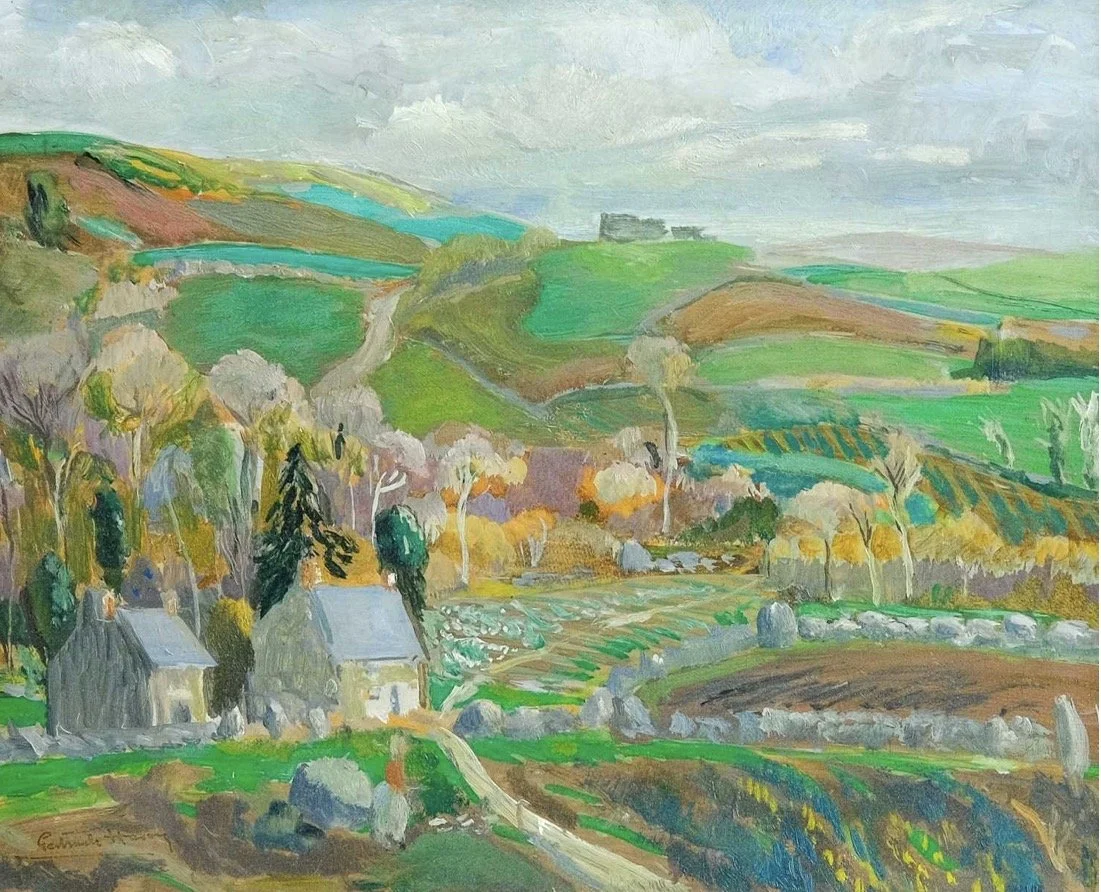
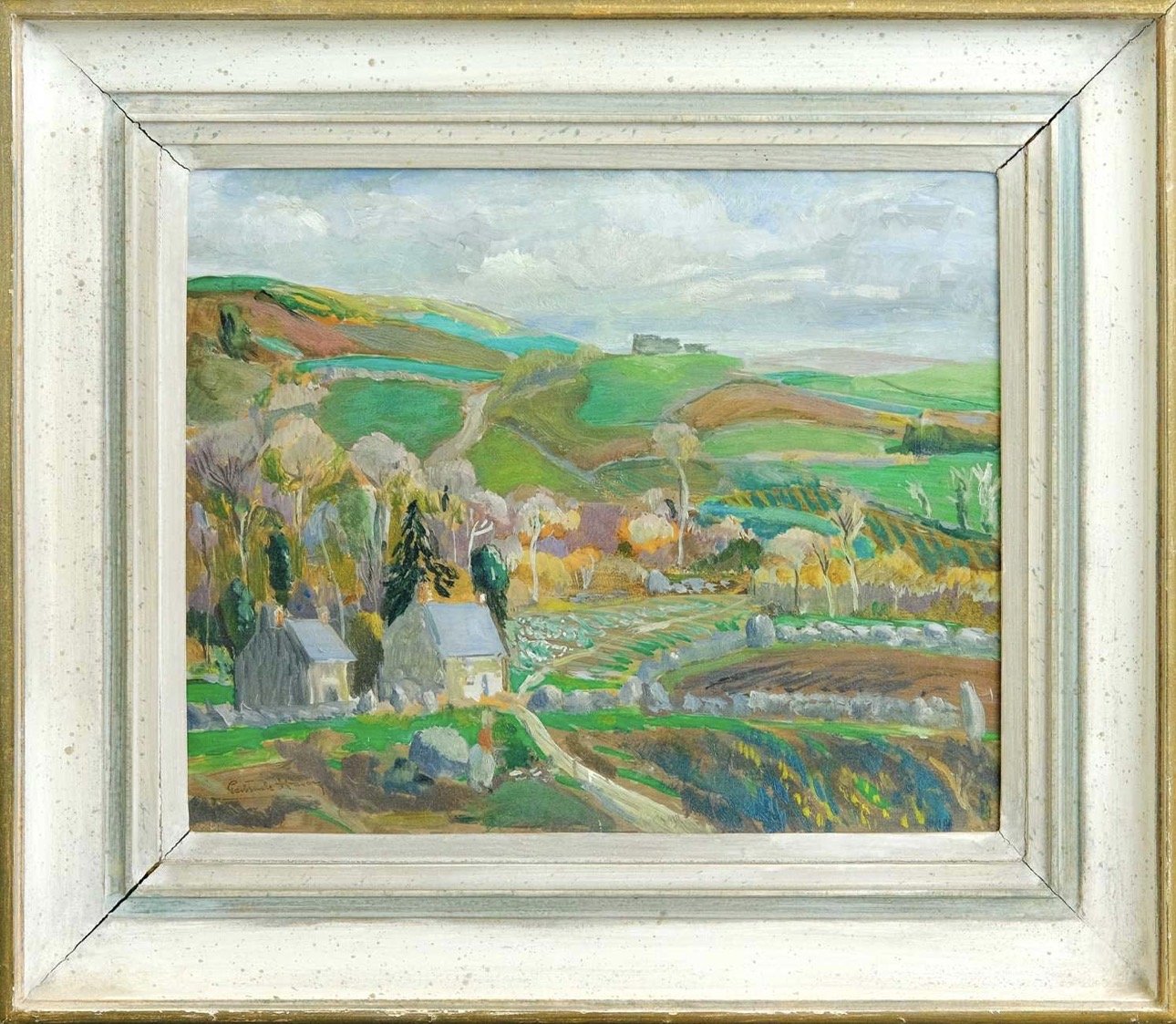
Farmstead, West Cornwall
Oil on board, signed, 32 x 39cm, 48 x 55cm framed.
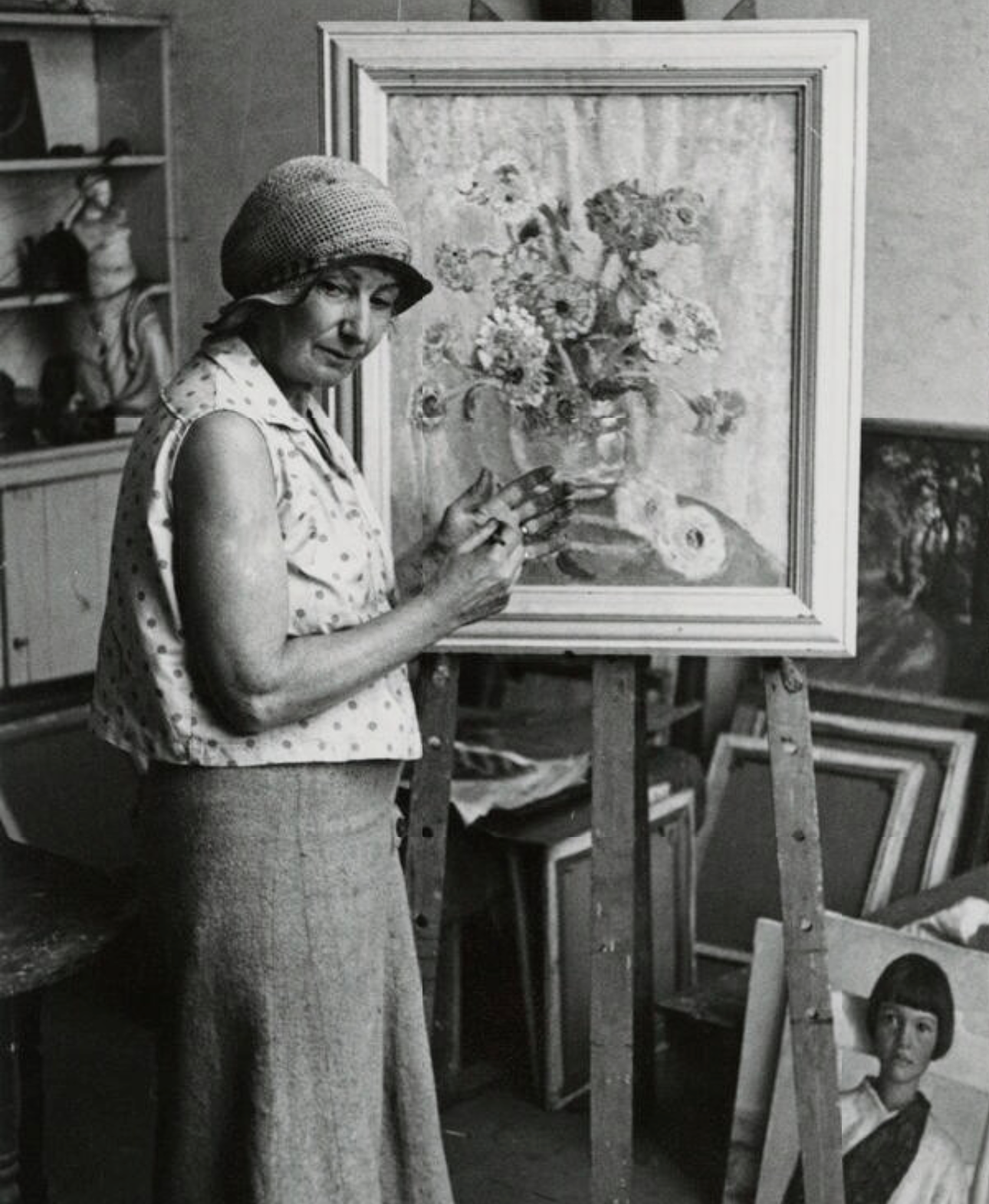
Gertrude Harvey was a painter and regular artists' model. She lived in Penzance, where she met and married the landscape painter, Harold Harvey, in 1911. After marrying, the couple settled in a cottage in Newlyn, Cornwall, with a studio nearby. They lived here throughout the First World War. Harold and Gertrude were close friends with many of the second generation artists, including Dod and Ernest Procter and Laura and Harold Knight.
This oil is in wonderfully original condition. It has been varnished, but there is no suggestion that it has ever been restored or even cleaned. In fact, a light cleaning may brighten the colours. The frame is likely to be the original and is wholly sympathetic with the work. Some shrinkage cracks can be seen at the mitres.
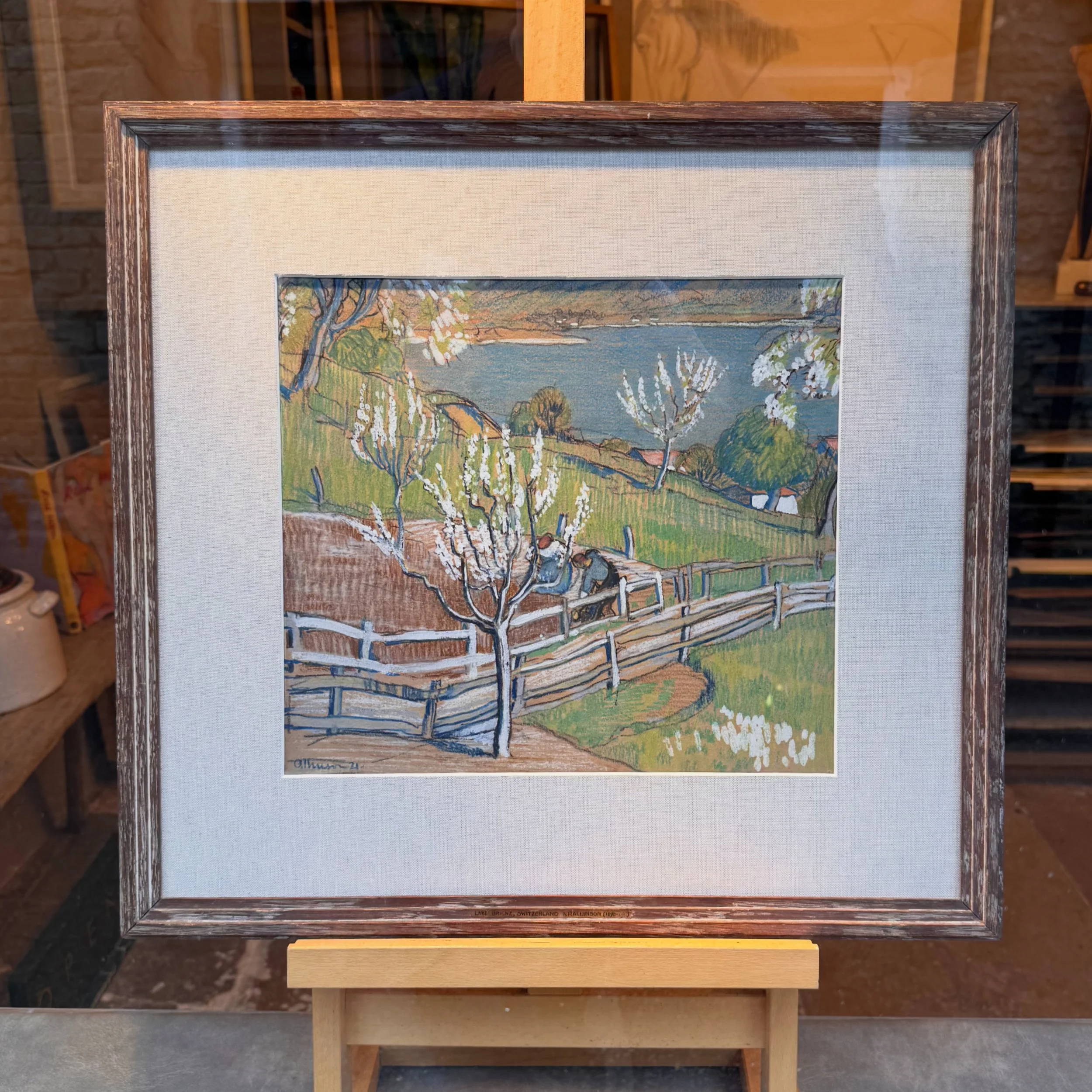
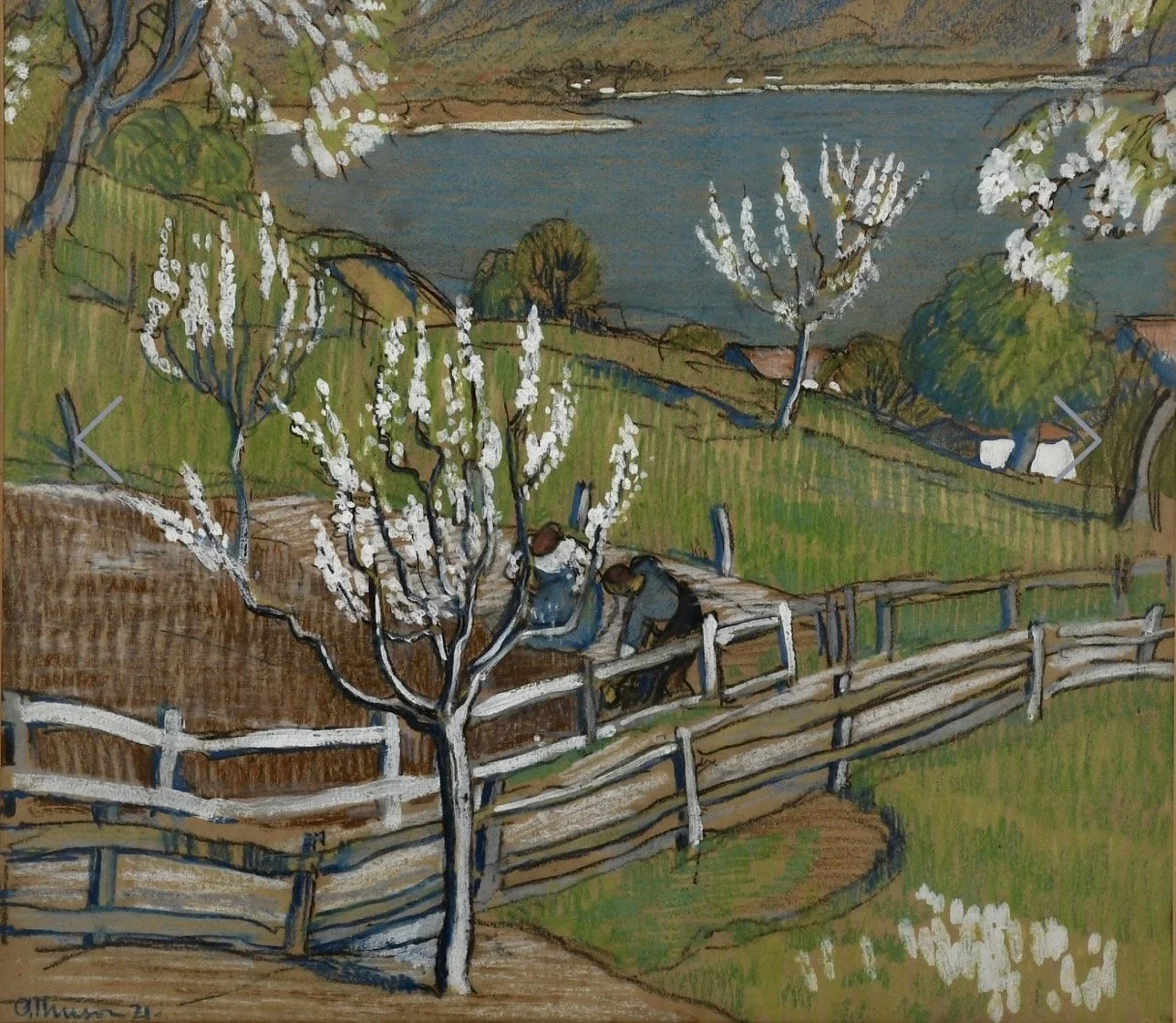
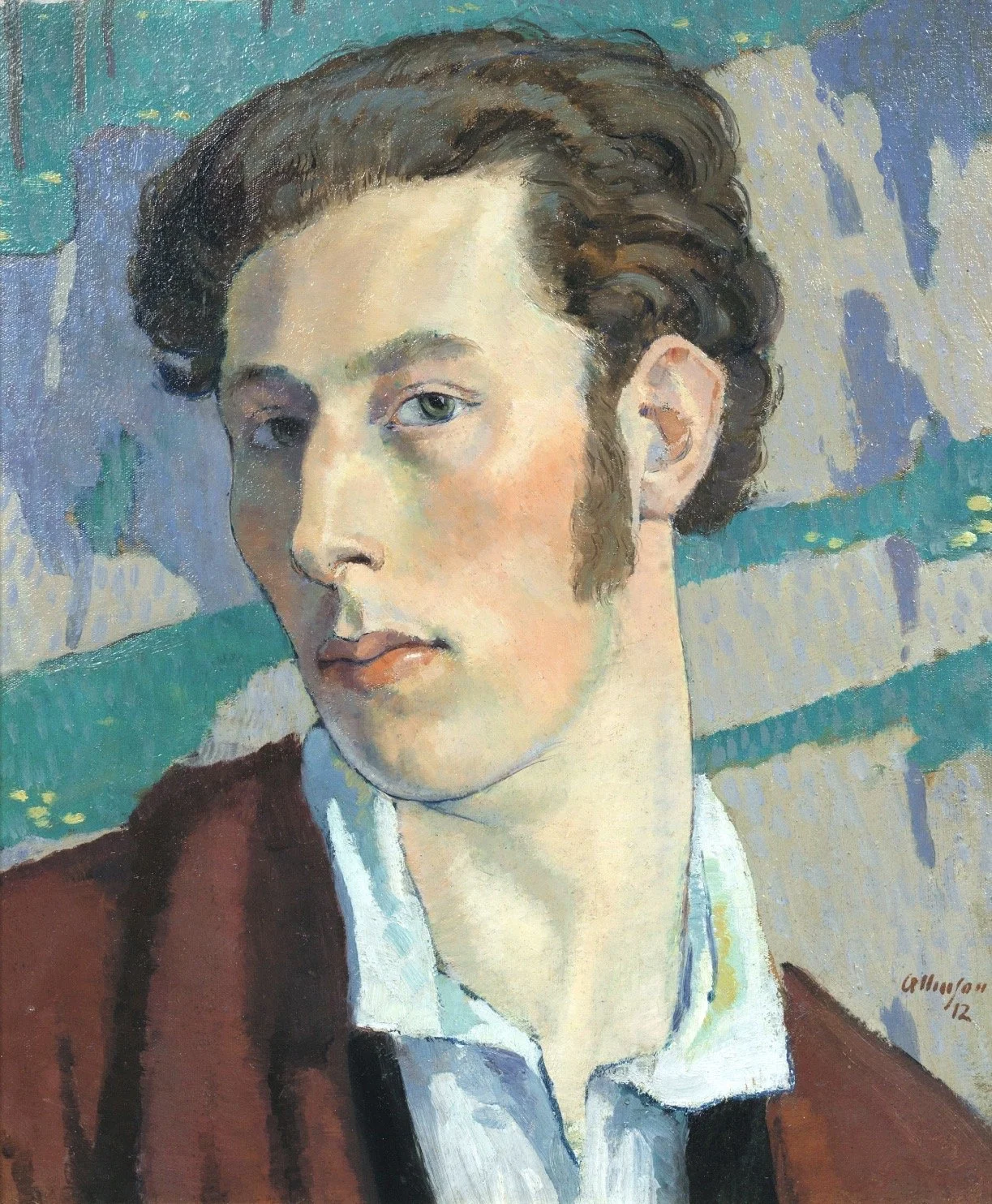
Adrian Paul Allinson, RBA ROI LG PS (1890-1959)
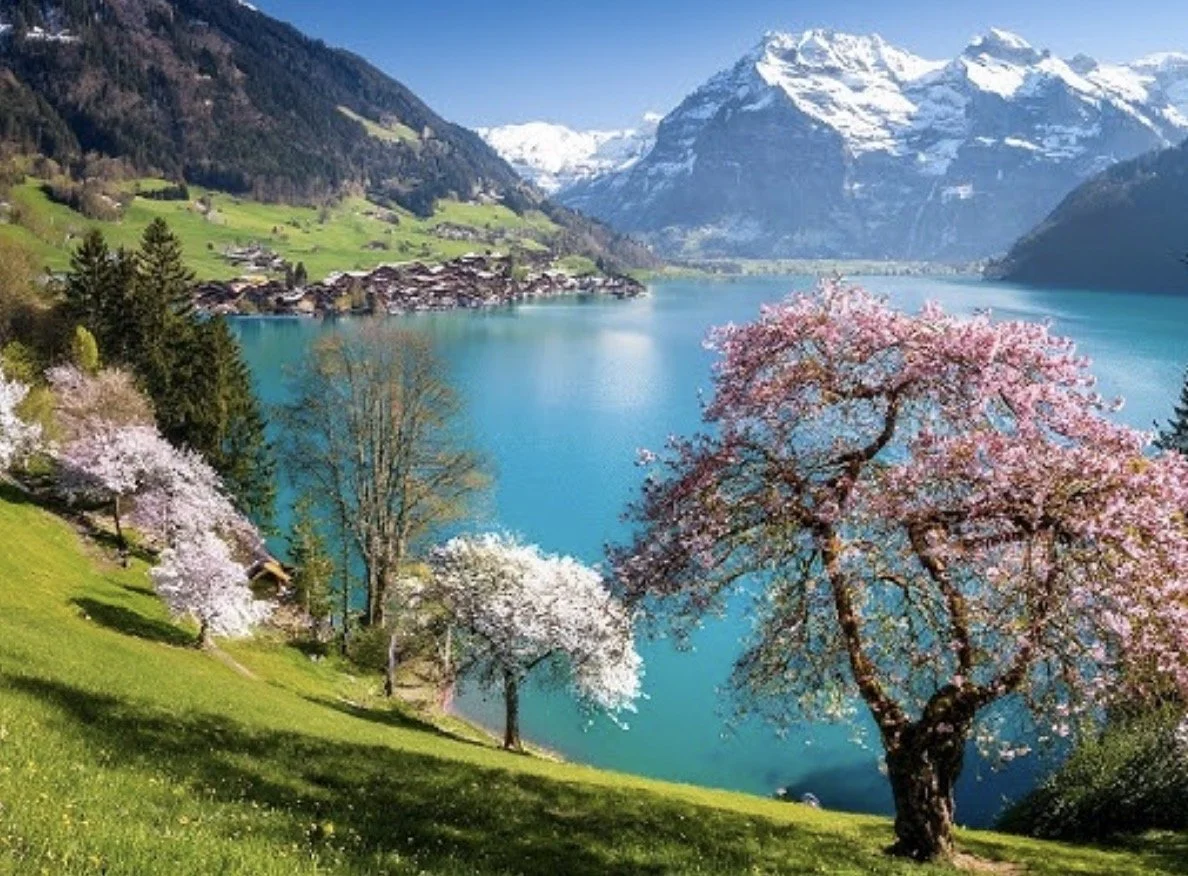
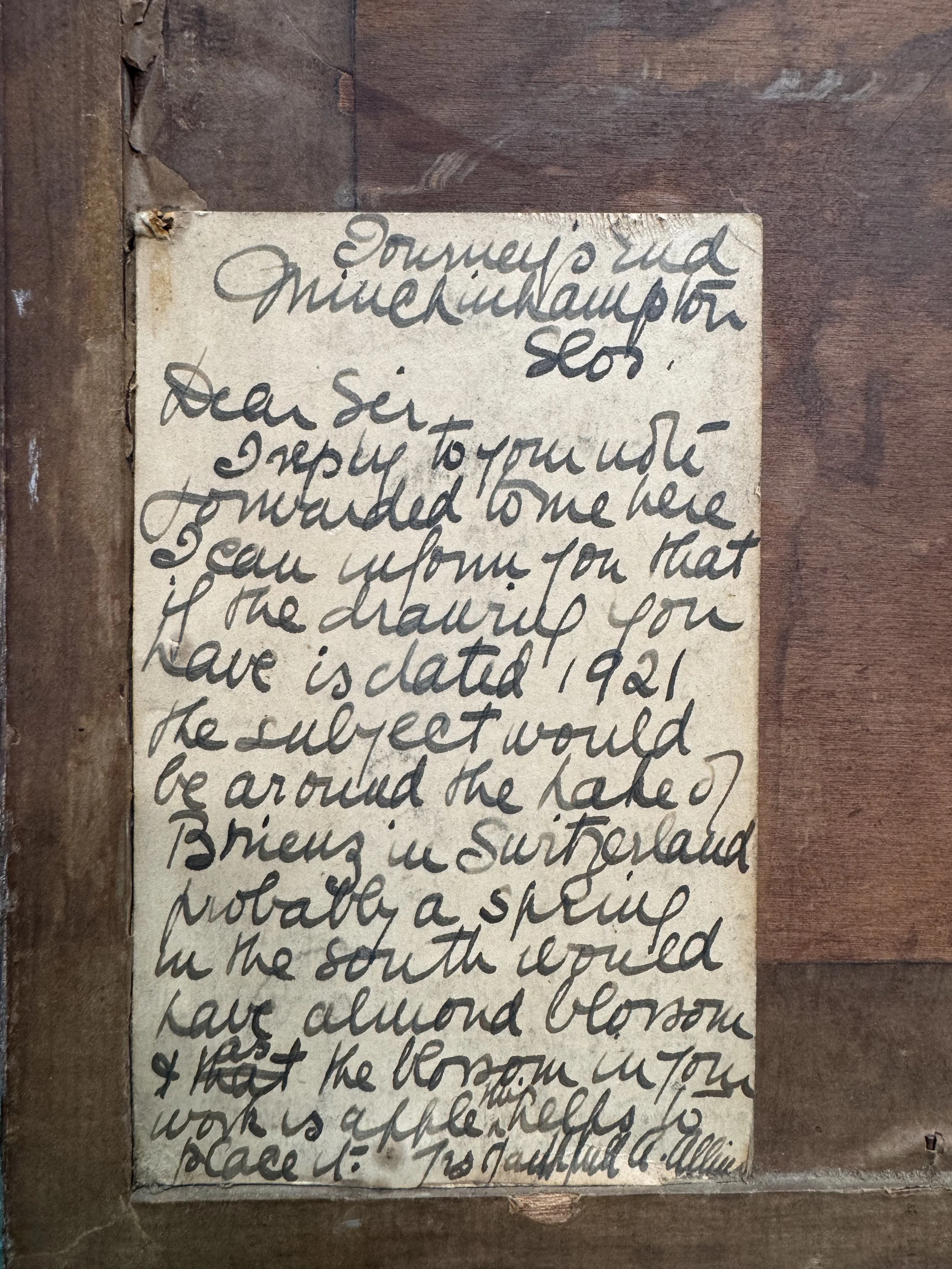
Lake Brienz, 1921
Pastel on paper
One of the hugely talented generation of artists to emerge just before the First World War, Adrian Allinson managed to hold his own through both his personality and his work. He became best known as a painter of appealing, stylised landscapes, figure and flower compositions. However, his manifold talents encompassed sculpture, wood carving, pottery, poster design and set design.
In 1919 Adrian Paul Allinson married Adelaide Clark (née Buckland), the widow of the art teacher Forbes Maitland Clark. After their marriage he adopted the fuller name Adrian Paul Allinson. They spent much of the early stages of their marriage in a small Swiss village, inspiring Allinson’s most famous continental landscapes. Allinson also maintained a studio in London at the Thackeray Studios in Fitzroy Square, and gave that as his address when beginning to exhibit at the RA from 1921. The fruits of his Swiss sojourn were shown in 1922 at a solo show at the St George’s Gallery.
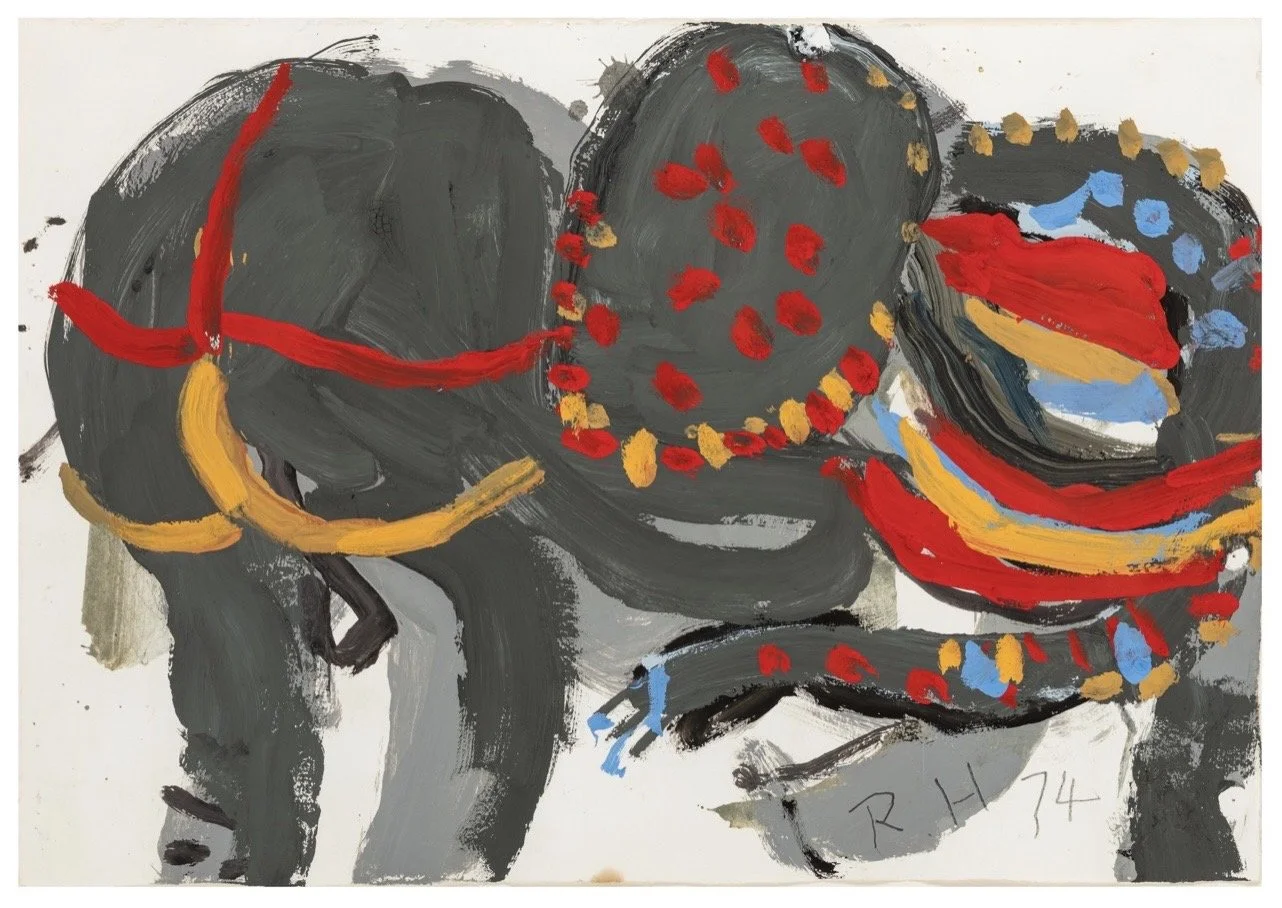
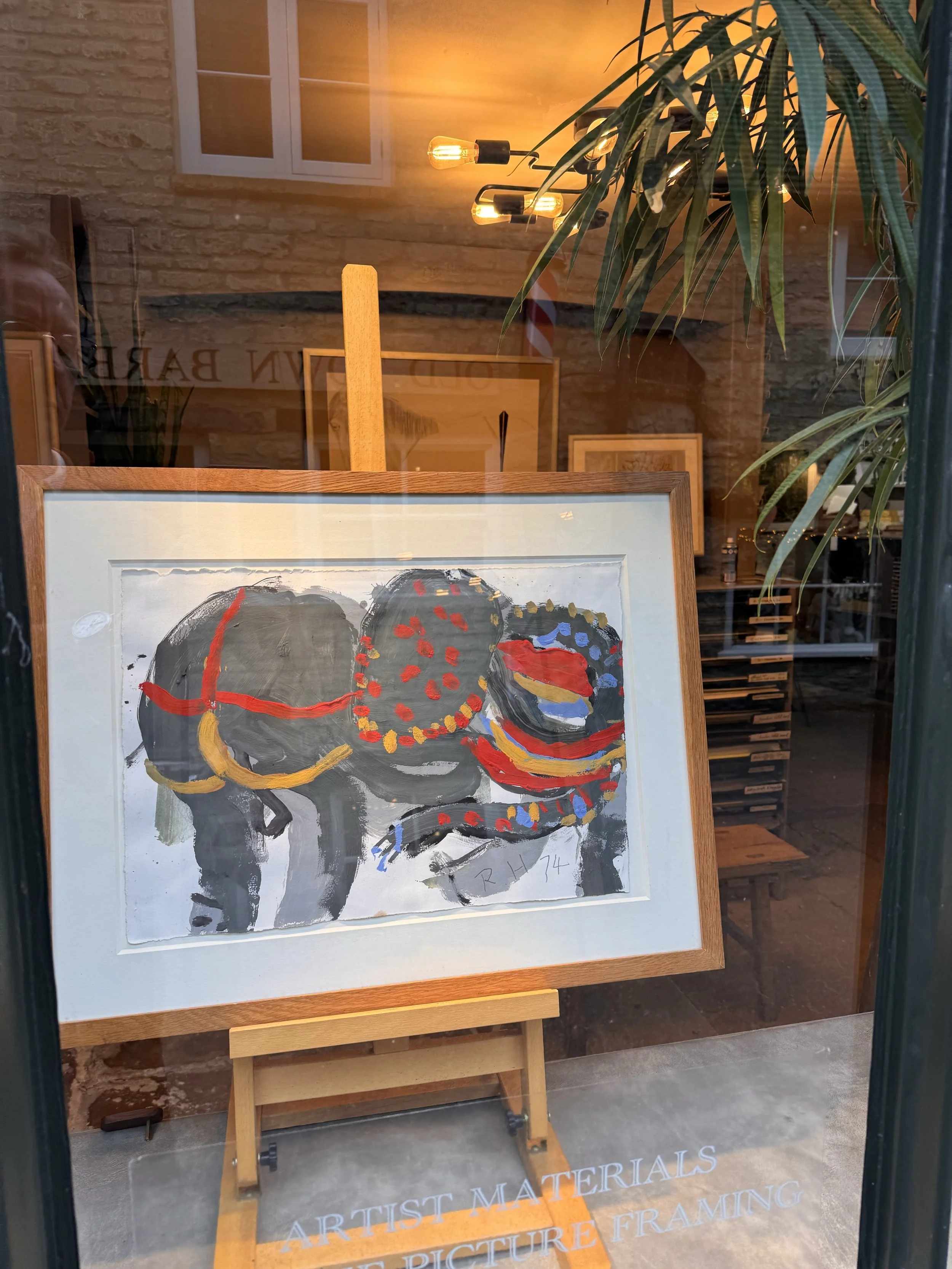
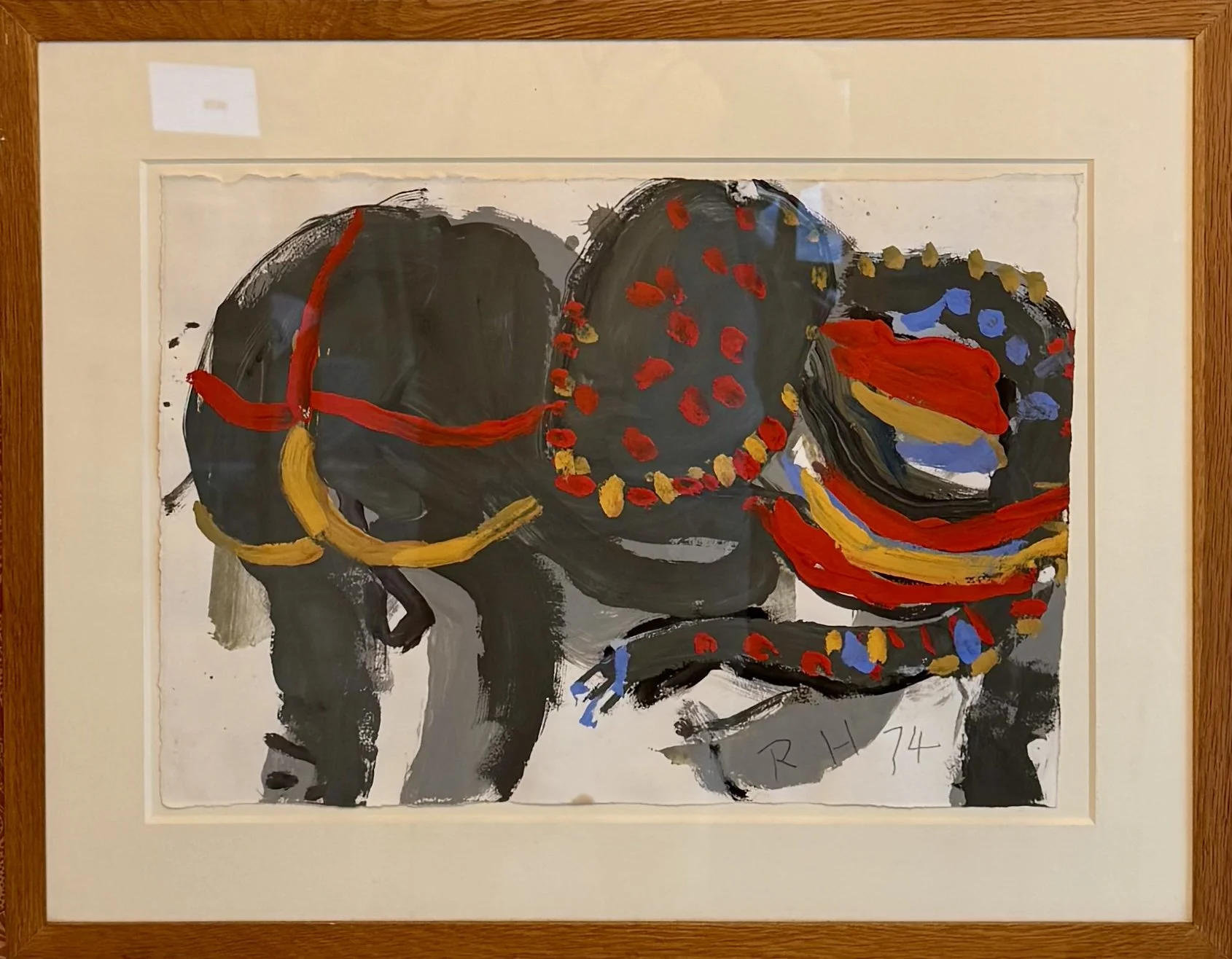
Roger Hilton CBE (1911-1975)
Gouache on paper
34.5 x 48.7cm
Provenance: Waddington Gallery
Born in 1911 and trained at the Slade School of Art, Hilton became one of the most distinctive voices associated with the St Ives and wider post-war British Abstraction scene.
Roger Hilton’s late work has a raw urgent energy that still feels contemporary. In the final two years of his life, while confined to bed in Cornwall, Hilton made the intimate “night letters” and related gouaches: insomniac, witty, sometimes bitter, and often hauntingly direct responses to art, illness, daily irritations, and his own mortality.
Hilton’s work is held in major public collections, including Tate, the British Museum, The V&A, The British Council Collection, The Government Art Collection, The National Portrait Gallery and many more.
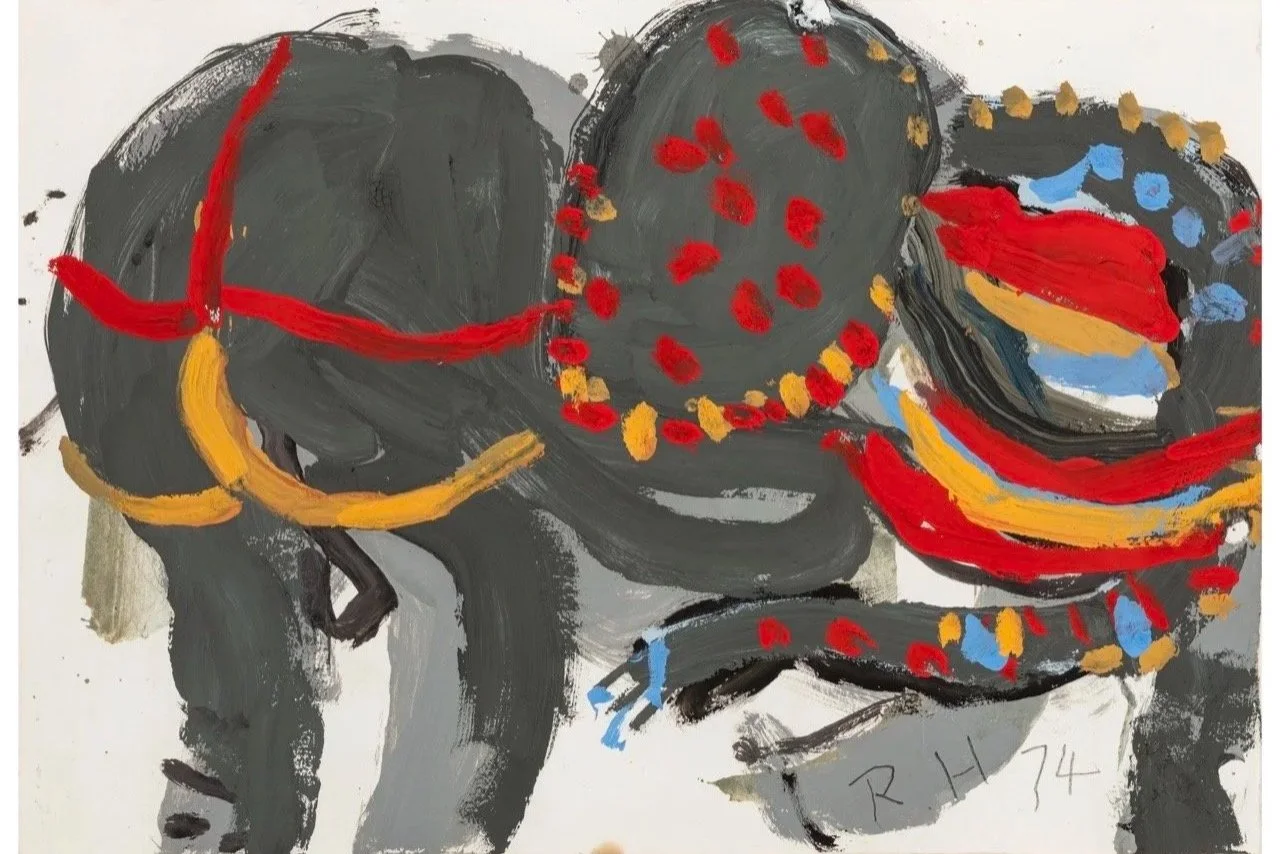
Painted in 1974, Elephant by Roger Hilton is a vivid and highly expressive example of the artist’s late burst of artistic creativity. Executed with sweeping brushwork and animated by bold passages of red, ochre and blue against a deep grey form, the composition transforms the circus elephant into a playful semi abstract presence.
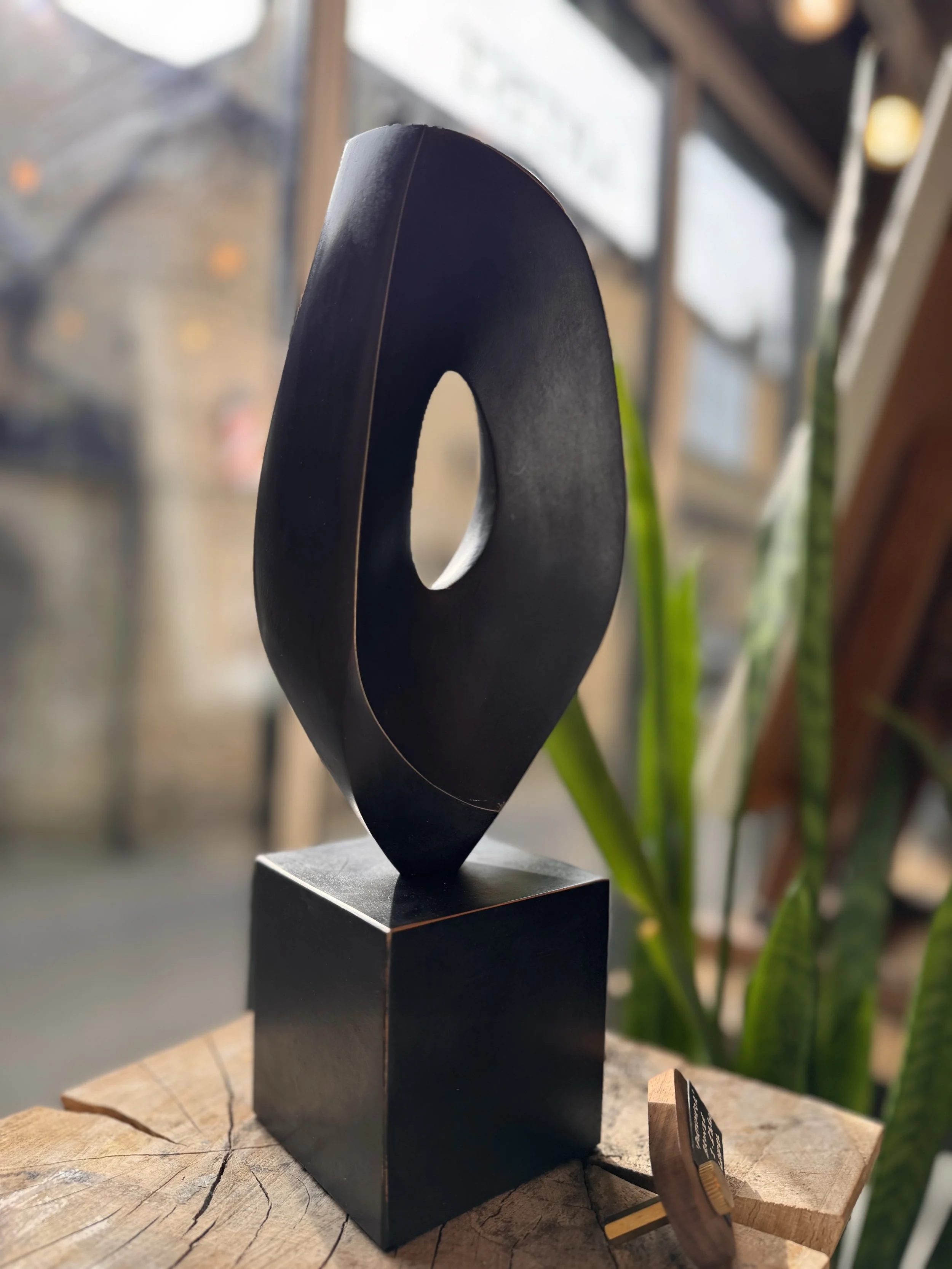
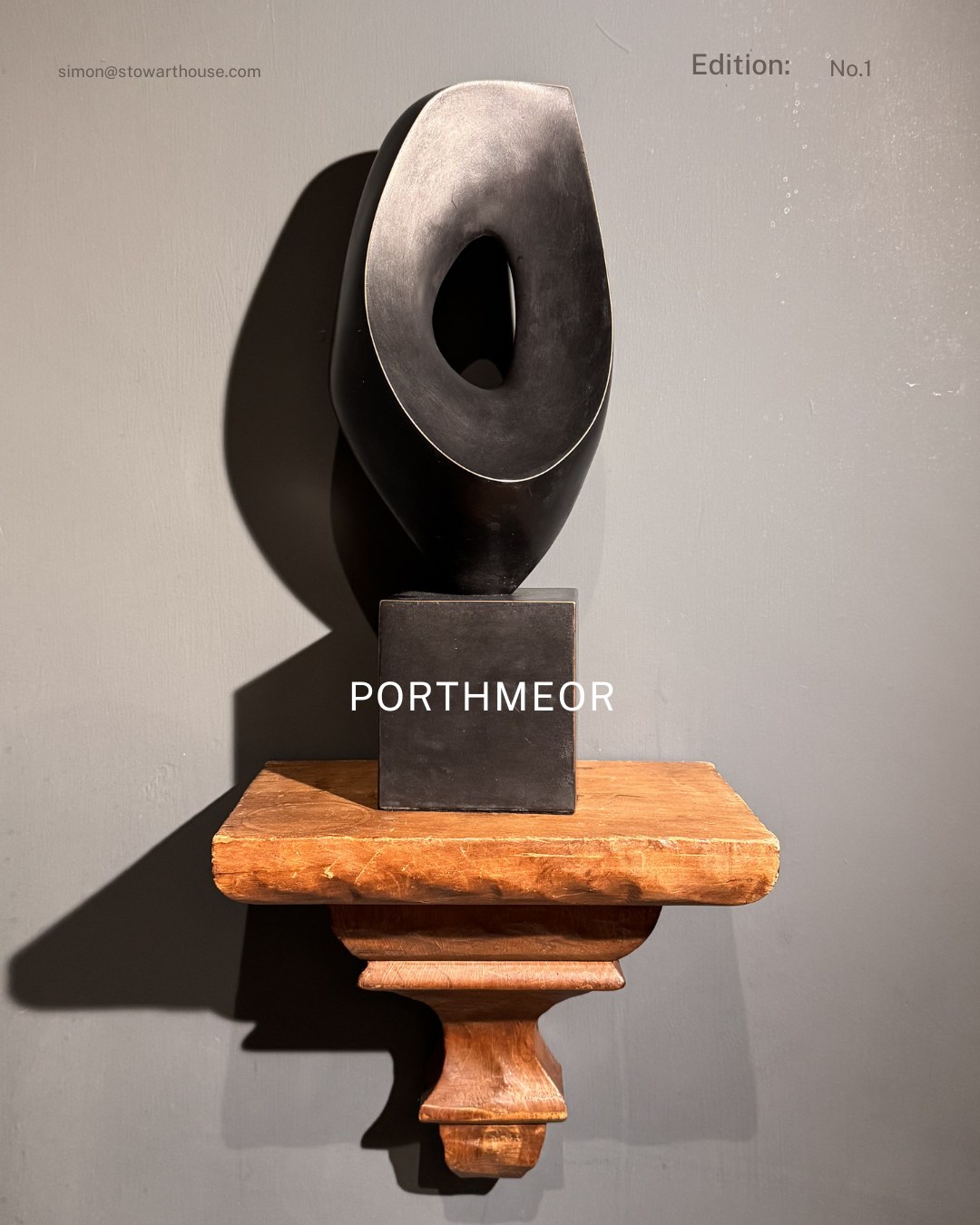
Inspired by the light, atmosphere and artistic heritage of Cornwall’s most celebrated beach, Porthmeor by Tom Leaper is a beautifully balanced contemporary work that captures the rhythm and energy of his native county. Drawing on both landscape tradition and contemporary abstraction, Porthmeor offers a sophisticated and evocative presence.
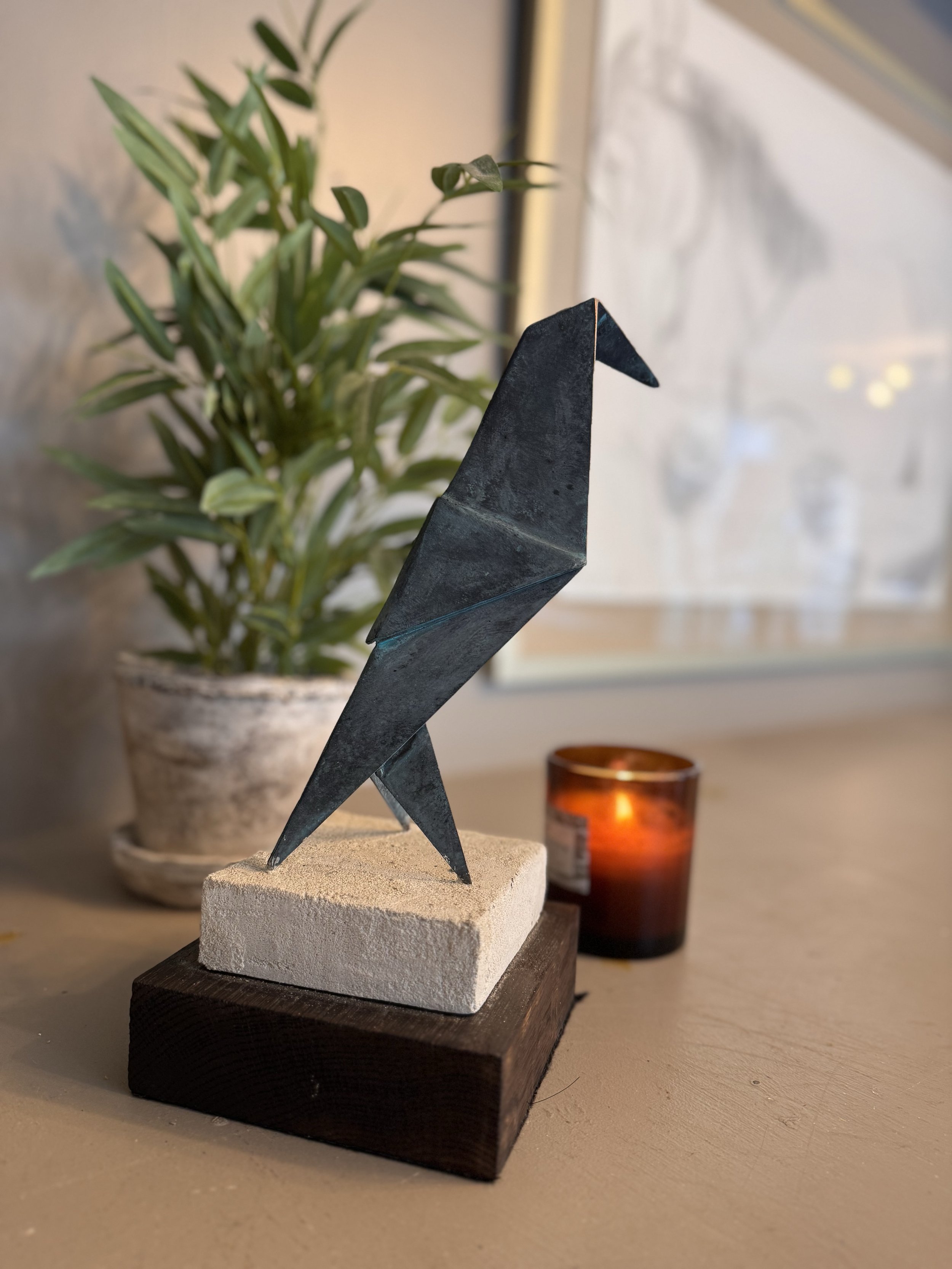
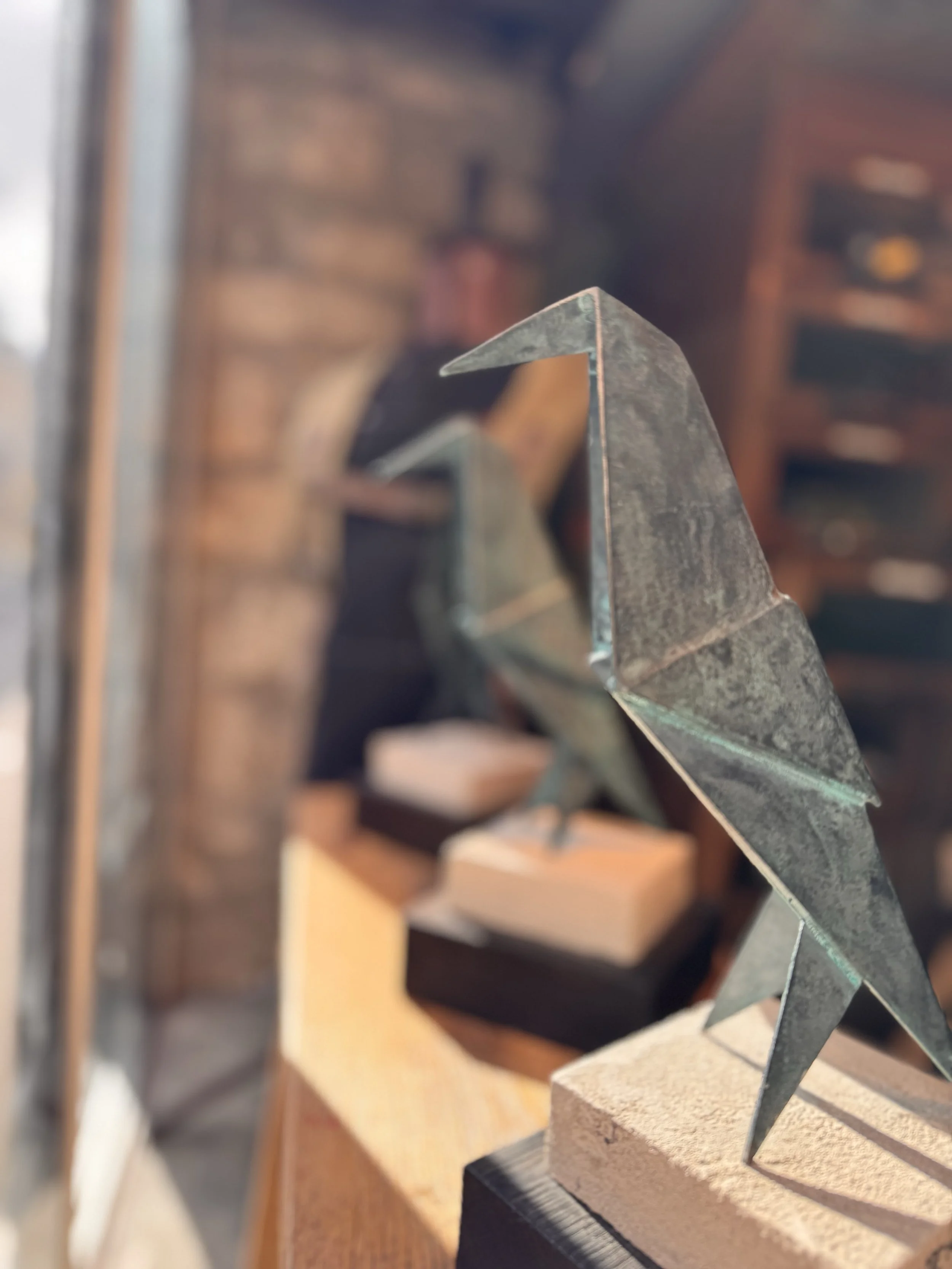
A striking fusion of contemporary sculpture and paper art, this original origami crow by Tom Leaper captures the intelligence, mystery and sharp elegance of one of nature’s most symbolic birds. The bronze is expertly folded by hand into a three dimensional form, capturing the character of the bird which is both playful and sophisticated.
No results match your search. Try removing a few filters.
We'll review your message and get back to you within 48 hours.