
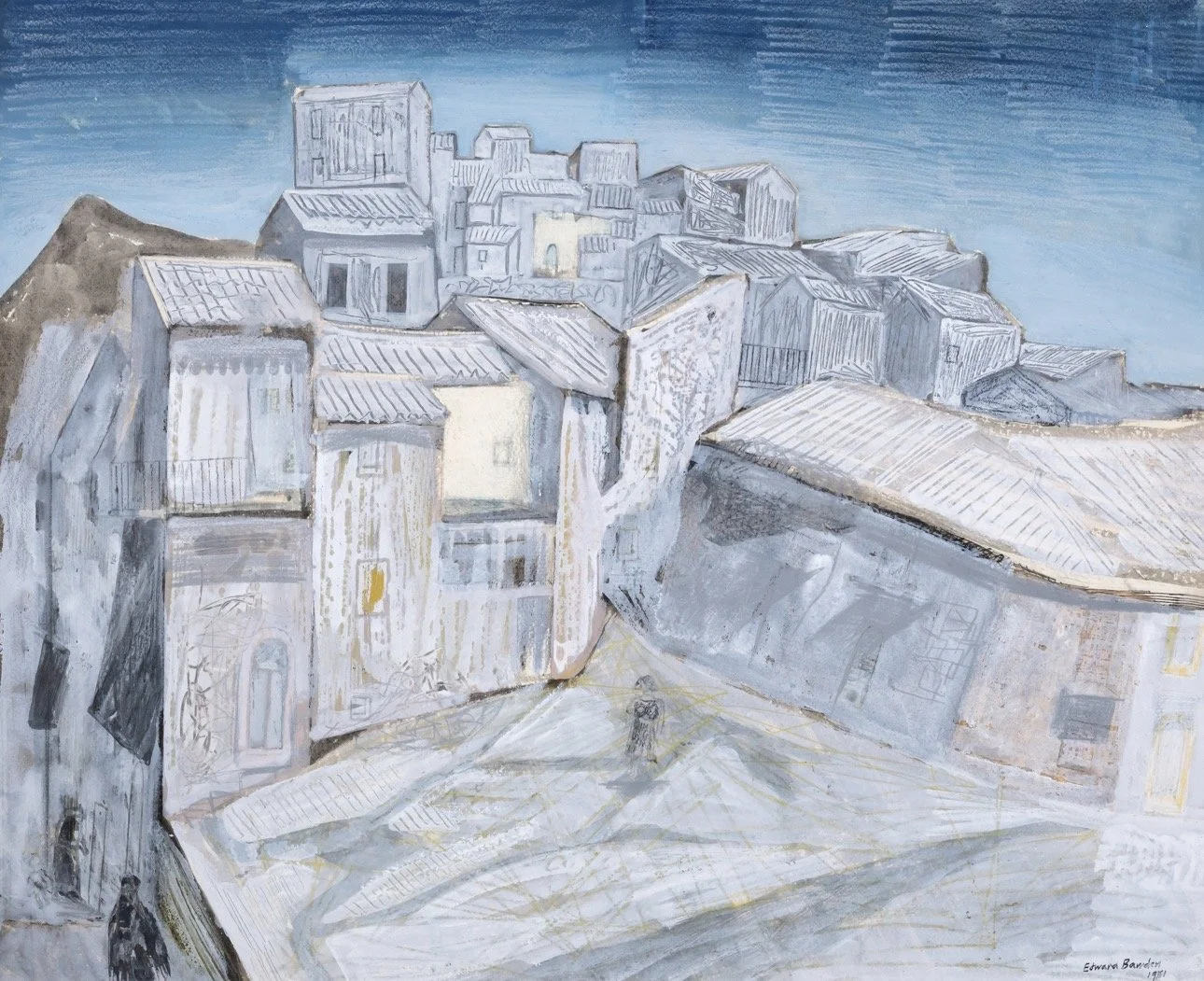
“Enna, Sicily” 1951
Gouache, watercolour and Crayon, signed and dated in black ink on wove paper, 44 × 55 cm
Provenance: By direct family decent
Exhibited: Arts Exhibition Bureau, 23 Albermarle St, London
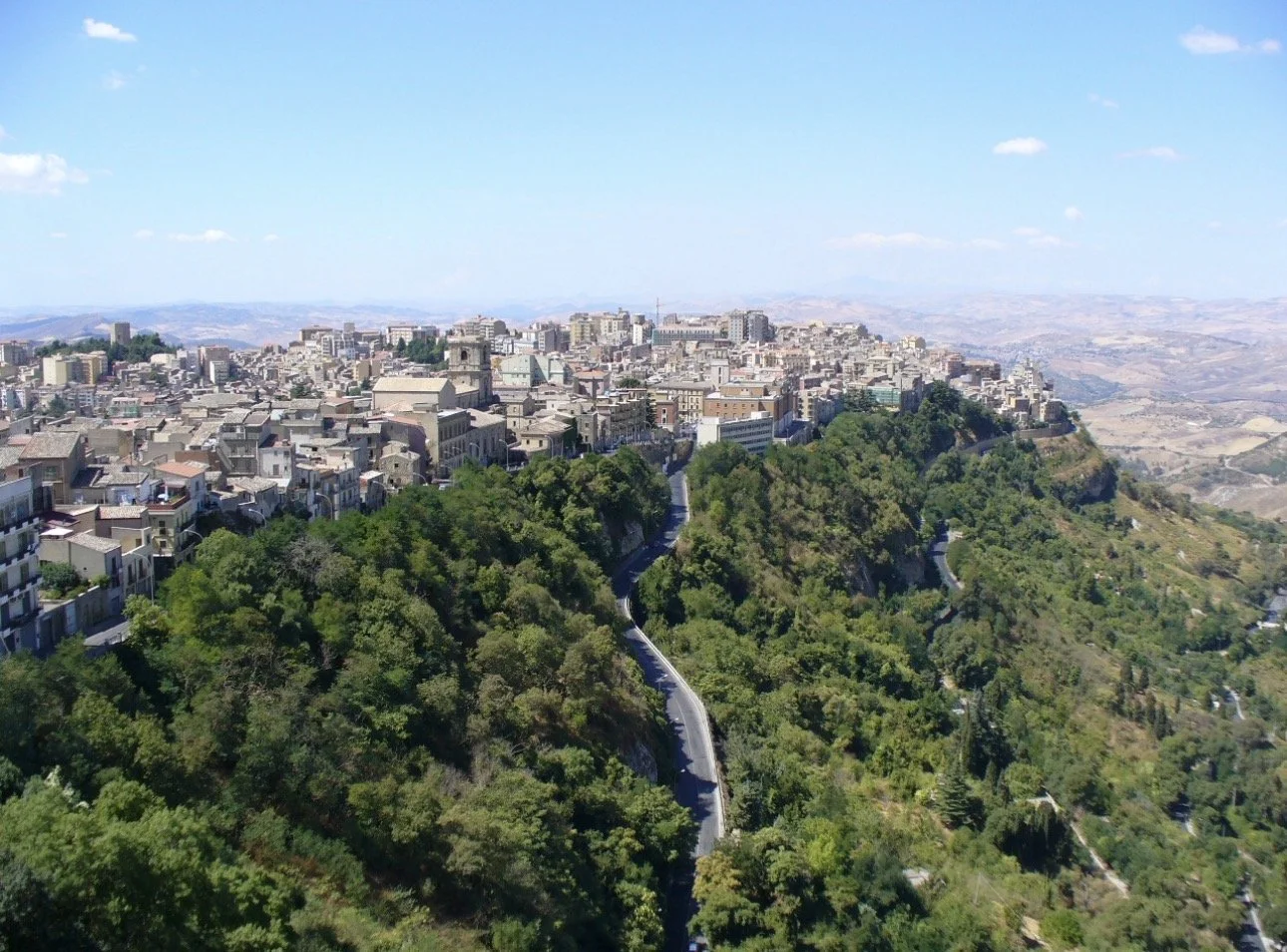
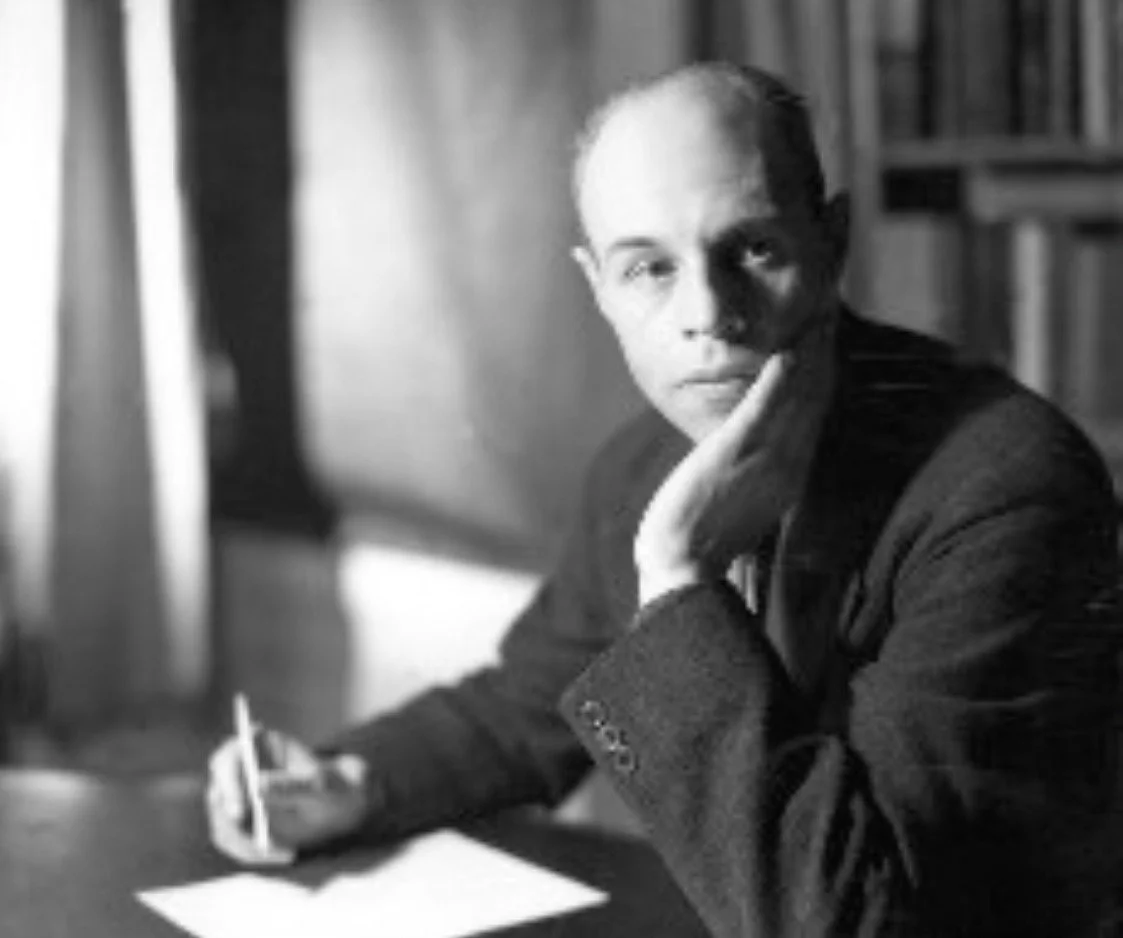
Edward Bawden was one of the most distinctive British artists of the 20th century, known for his crisp line, decorative intelligence, and ability to move easily between painting, printmaking, illustration, posters, murals, and design. His trip to Sicily in 1951 produced a notable body of work centered on Enna, the hill town in the island’s interior, where he and Walter Hoyle sought relief from the heat and dust and painted the landscape and town from above.
Bawden in Sicily
The 1951 Sicilian journey is remembered especially for the views around Enna, a dramatic hill town in central Sicily. A later account of the trip notes that the artists spent much of their time in and around Enna, and that some of the resulting works were later shown in exhibitions, including a 1952 one-man show and a later Fry Art Gallery display devoted to Enna watercolours and drawings. The subject suited Bawden well: he had a gift for distilling places into clear shapes, strong structure, and lively pattern rather than simply reproducing topographical detail.
Why he matters
Bawden matters to British art because he helped define a modern British visual language that was both practical and poetic. He was a major graphic artist as well as a painter, and his work for books, posters, murals, and public commissions helped shape everyday British visual culture across the mid-20th century. He also bridged the gap between fine art and applied art, which is one reason he remains so admired: his work was inventive without losing clarity, and stylish without becoming cold.
Museums with his work
Bawden’s work is held in many public collections, including these museums and galleries:
• Tate
• Victoria and Albert Museum
• Imperial War Museums
• Fry Art Gallery, Saffron Walden
• The Higgins Bedford
• The Ingram Collection of Modern British and Contemporary Art at The Lightbox, Woking
A brief note on style
What makes the Enna pictures appealing is that they show Bawden at full strength: structure, observation, and atmosphere working together. Rather than chasing grandeur, he turned a hill town into a composition of planes, contours, and light, which is exactly the sort of visual intelligence that made him one of the most respected British artists of his generation.
“Enna, Sicily” 1951
Gouache, watercolour and Crayon, signed and dated in black ink on wove paper, 44 × 55 cm
Provenance: By direct family decent
Exhibited: Arts Exhibition Bureau, 23 Albermarle St, London
Edward Bawden was one of the most distinctive British artists of the 20th century, known for his crisp line, decorative intelligence, and ability to move easily between painting, printmaking, illustration, posters, murals, and design. His trip to Sicily in 1951 produced a notable body of work centered on Enna, the hill town in the island’s interior, where he and Walter Hoyle sought relief from the heat and dust and painted the landscape and town from above.
Bawden in Sicily
The 1951 Sicilian journey is remembered especially for the views around Enna, a dramatic hill town in central Sicily. A later account of the trip notes that the artists spent much of their time in and around Enna, and that some of the resulting works were later shown in exhibitions, including a 1952 one-man show and a later Fry Art Gallery display devoted to Enna watercolours and drawings. The subject suited Bawden well: he had a gift for distilling places into clear shapes, strong structure, and lively pattern rather than simply reproducing topographical detail.
Why he matters
Bawden matters to British art because he helped define a modern British visual language that was both practical and poetic. He was a major graphic artist as well as a painter, and his work for books, posters, murals, and public commissions helped shape everyday British visual culture across the mid-20th century. He also bridged the gap between fine art and applied art, which is one reason he remains so admired: his work was inventive without losing clarity, and stylish without becoming cold.
Museums with his work
Bawden’s work is held in many public collections, including these museums and galleries:
• Tate
• Victoria and Albert Museum
• Imperial War Museums
• Fry Art Gallery, Saffron Walden
• The Higgins Bedford
• The Ingram Collection of Modern British and Contemporary Art at The Lightbox, Woking
A brief note on style
What makes the Enna pictures appealing is that they show Bawden at full strength: structure, observation, and atmosphere working together. Rather than chasing grandeur, he turned a hill town into a composition of planes, contours, and light, which is exactly the sort of visual intelligence that made him one of the most respected British artists of his generation.