
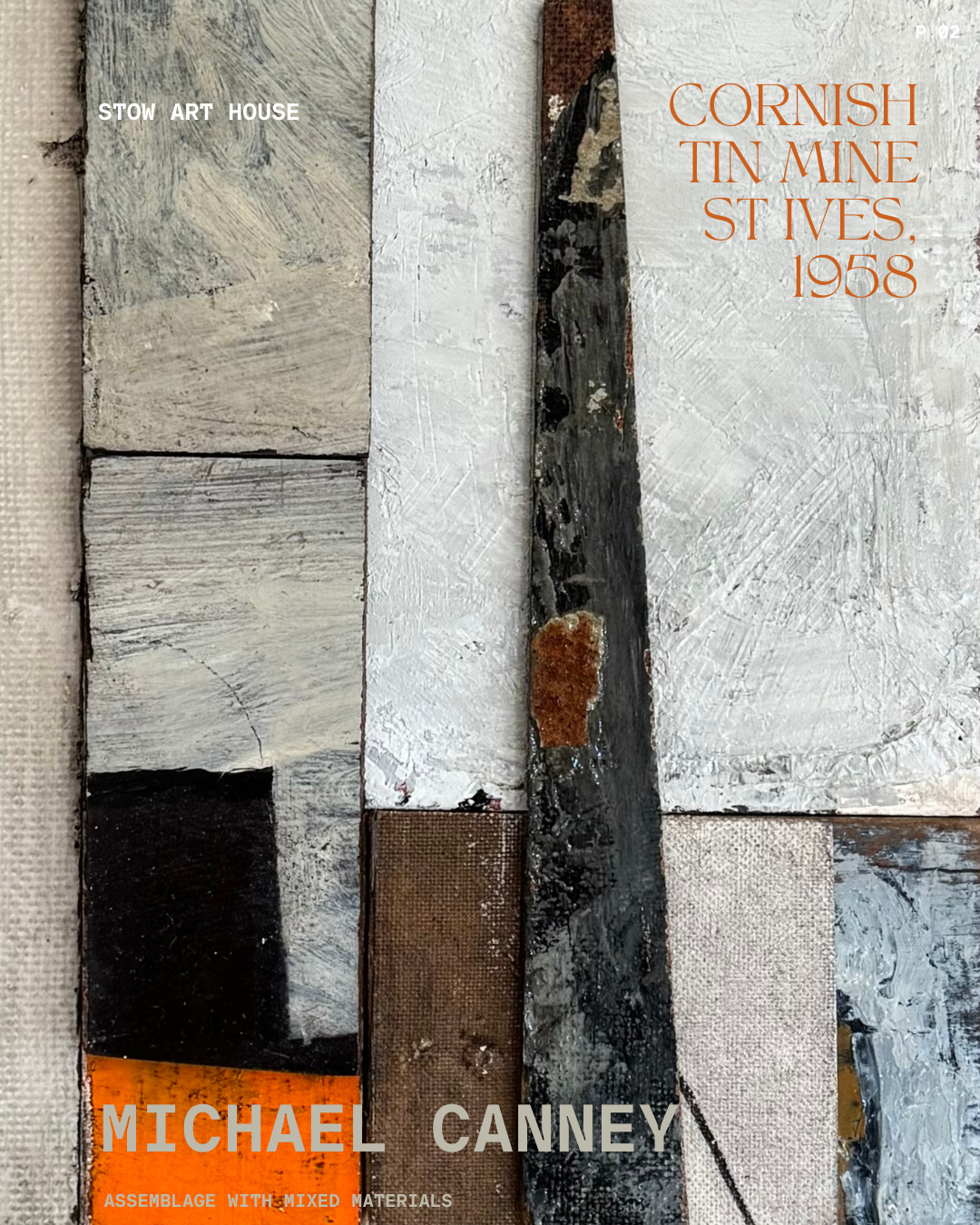
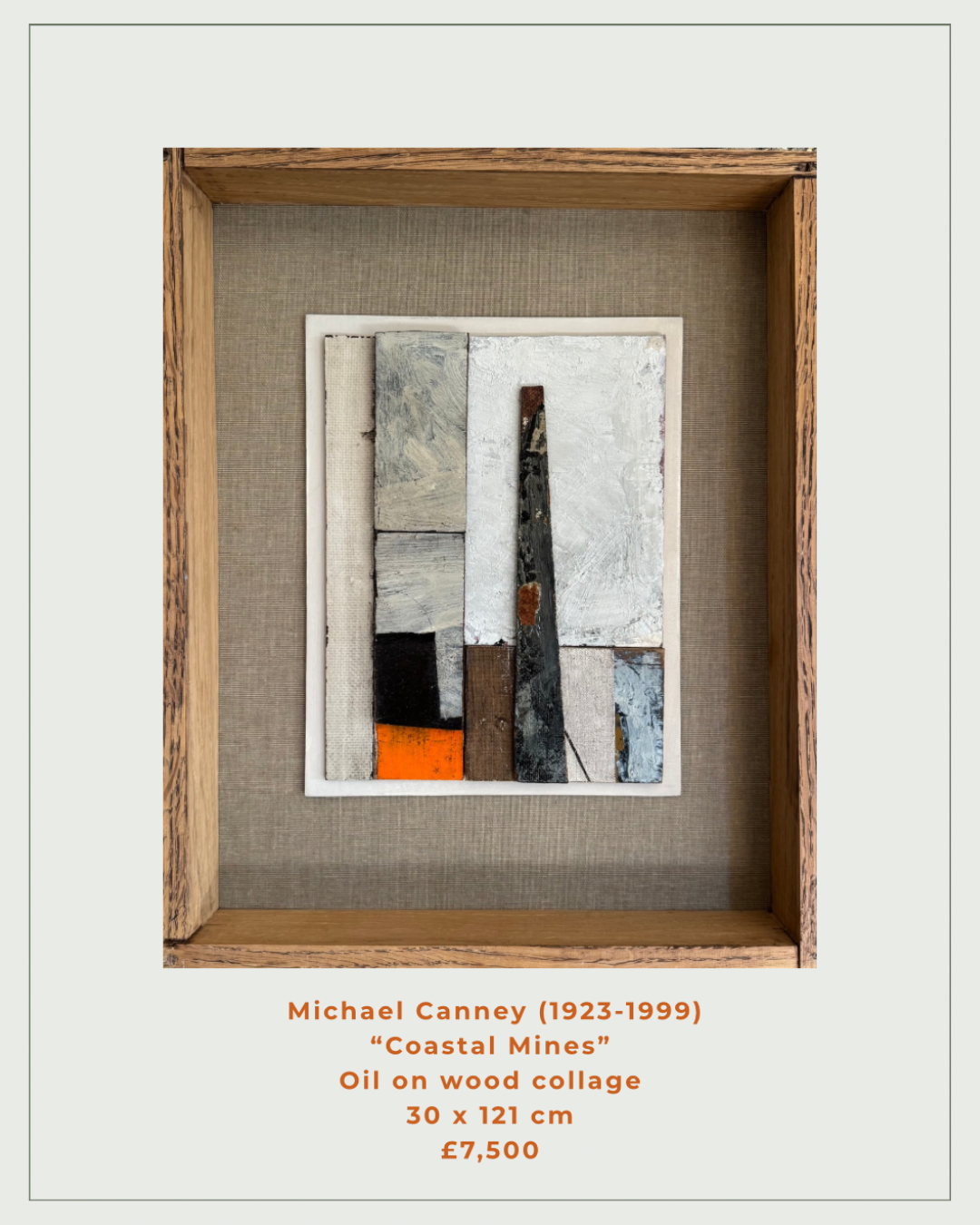
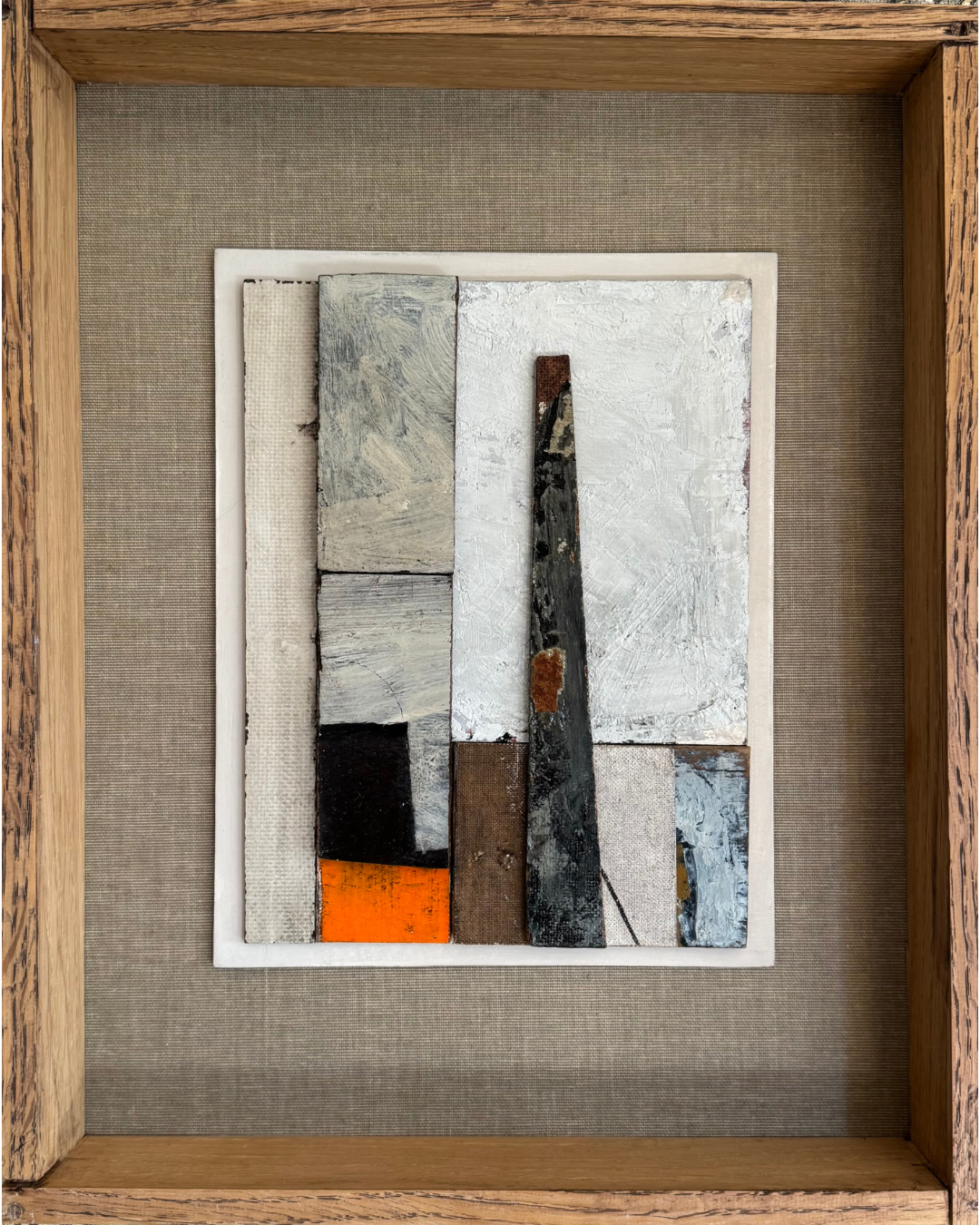
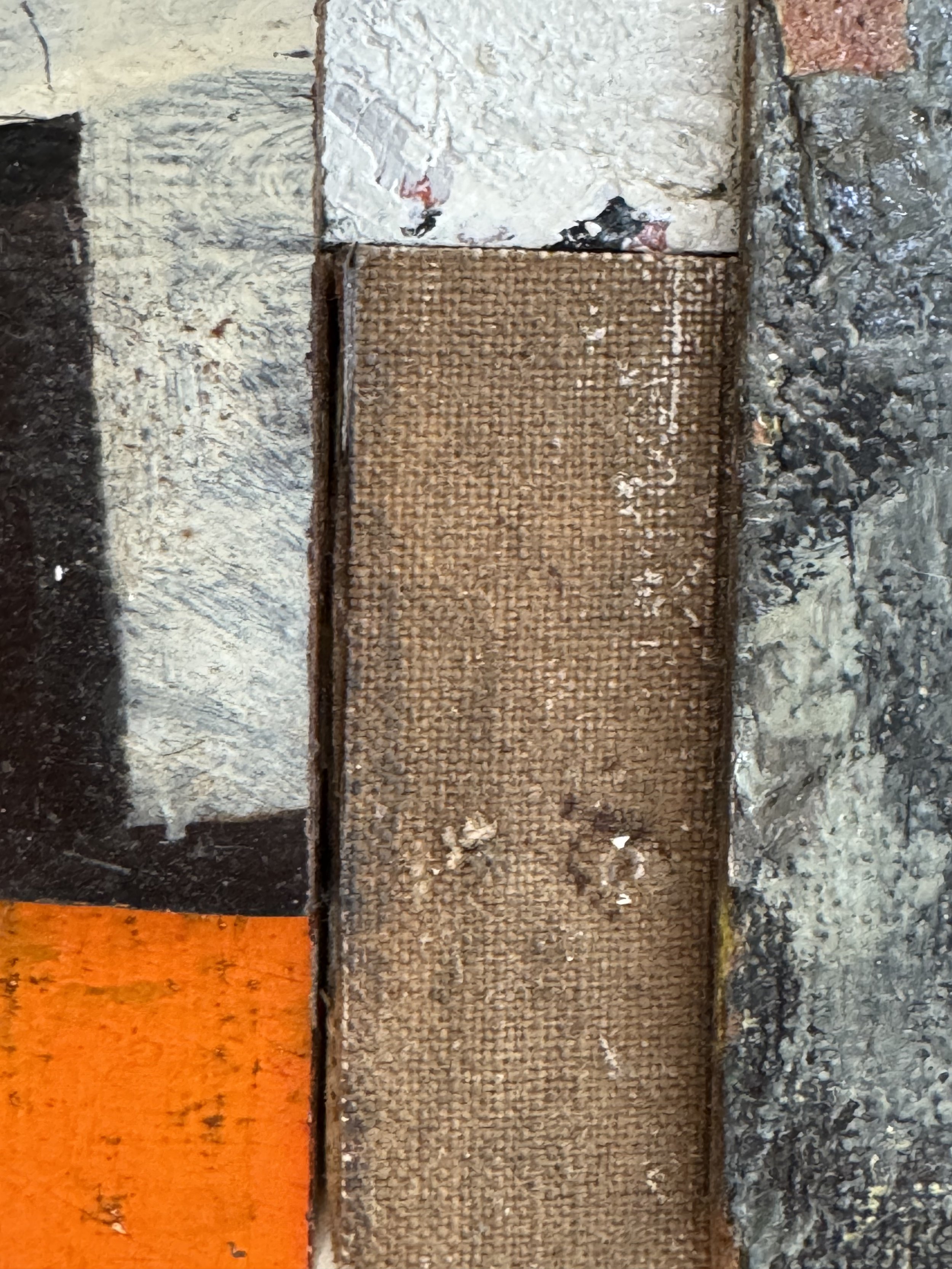
‘Cornish Mine’
1956
Assemblage by Michael Canney
Michael Canney’s work in Cornwall in the 1950s was shaped by the Cornish landscape and coast, which helped move his painting away from earlier, more figurative approaches toward increasingly abstract compositions. The rhythm of the land, the sea, and the generation of form in the local environment became central to his art, so even when his work simplified into abstraction it still felt rooted in Cornwall’s light, contours, and coastal atmosphere. By the late 1950s, that relationship with place had become a key force in his development, giving his paintings both structure and a strong sense of local identity.
The St Ives environment encouraged Canney toward a more modern, abstract language because it placed him among artists who treated landscape as a source of form, colour, and structure rather than simple description. Working in a town shaped by strong light, rugged coastline, and an active artistic community, he absorbed the St Ives emphasis on reducing the scene to essential shapes and relationships, while still keeping a clear connection to Cornwall. In Canney’s case, that setting seems to have helped him move between observation and abstraction, so the local environment was not just a subject but a catalyst for simplifying and clarifying his style.
‘Cornish Mine’
1956
Assemblage by Michael Canney
Michael Canney’s work in Cornwall in the 1950s was shaped by the Cornish landscape and coast, which helped move his painting away from earlier, more figurative approaches toward increasingly abstract compositions. The rhythm of the land, the sea, and the generation of form in the local environment became central to his art, so even when his work simplified into abstraction it still felt rooted in Cornwall’s light, contours, and coastal atmosphere. By the late 1950s, that relationship with place had become a key force in his development, giving his paintings both structure and a strong sense of local identity.
The St Ives environment encouraged Canney toward a more modern, abstract language because it placed him among artists who treated landscape as a source of form, colour, and structure rather than simple description. Working in a town shaped by strong light, rugged coastline, and an active artistic community, he absorbed the St Ives emphasis on reducing the scene to essential shapes and relationships, while still keeping a clear connection to Cornwall. In Canney’s case, that setting seems to have helped him move between observation and abstraction, so the local environment was not just a subject but a catalyst for simplifying and clarifying his style.