
Ivon Hitchens CBE (1893-1979)
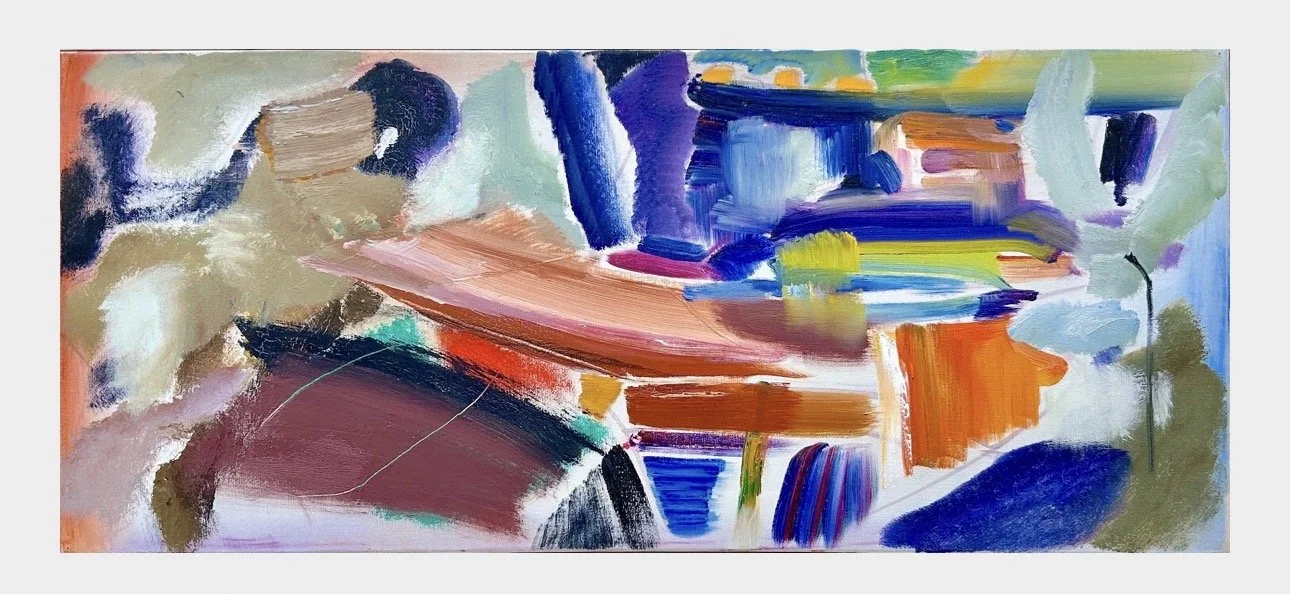
Untitled
Oil on canvas
45 × 105 cm
Born in London, Ivon Hitchens trained at St John’s Wood School of Art and the Royal Academy Schools before becoming a leading artist in British Modernism. Hitchens was a dedicated founding member of the Seven and Five Society, which began as a traditional group but gradually transformed into a pioneering organisation, presenting Britain’s first all-abstract art exhibition in 1935.
After moving to woodland near Petworth in West Sussex during the Second World War, he was greatly inspired by the surrounding countryside and translated the rhythms of trees, water and light into energetic brushstrokes of intense colour across panoramic canvases. His work is widely celebrated for its considered balance of observation with abstraction and is represented in major collections including Tate, the Arts Council and the Government Art Collection.
Hitchens was appointed CBE in 1958 in recognition of his contribution to modern British painting.
POA (Price on application)
Ivon Hitchens CBE (1893-1979)
Untitled
Oil on canvas
45 × 105 cm
Born in London, Ivon Hitchens trained at St John’s Wood School of Art and the Royal Academy Schools before becoming a leading artist in British Modernism. Hitchens was a dedicated founding member of the Seven and Five Society, which began as a traditional group but gradually transformed into a pioneering organisation, presenting Britain’s first all-abstract art exhibition in 1935.
After moving to woodland near Petworth in West Sussex during the Second World War, he was greatly inspired by the surrounding countryside and translated the rhythms of trees, water and light into energetic brushstrokes of intense colour across panoramic canvases. His work is widely celebrated for its considered balance of observation with abstraction and is represented in major collections including Tate, the Arts Council and the Government Art Collection.
Hitchens was appointed CBE in 1958 in recognition of his contribution to modern British painting.
POA (Price on application)